The destinations
Eleven deep-dives sit under this hub: the falls, the parks, the river, the lakes, the wetlands, and the two cities. Each one is written from ground-truth research, web-verified against current sources, and marked where something still needs confirming with an operator before you book. Start with the cards below, then go deep.
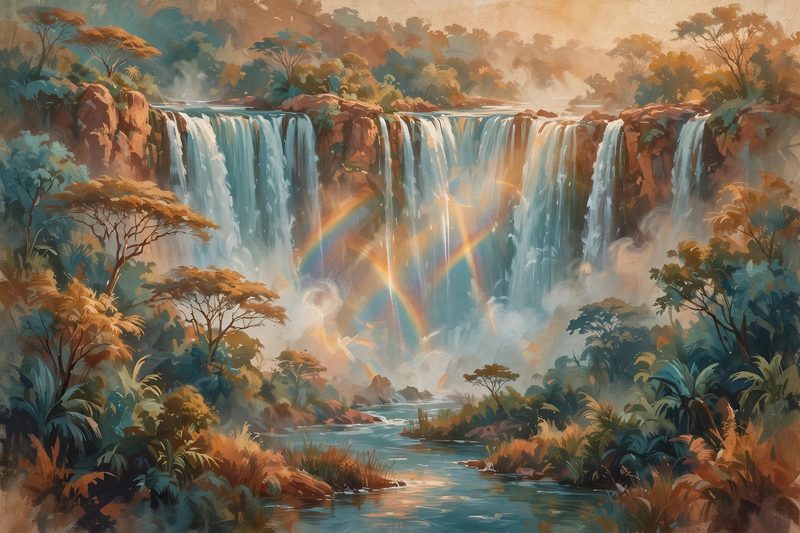
Mosi-oa-Tunya, the 1,708-metre curtain of the Zambezi. The Zambia side gets you close to the lip: the Knife-Edge Bridge, Livingstone Island, and Devil's Pool (mid-Aug to late Dec, water-level dependent).
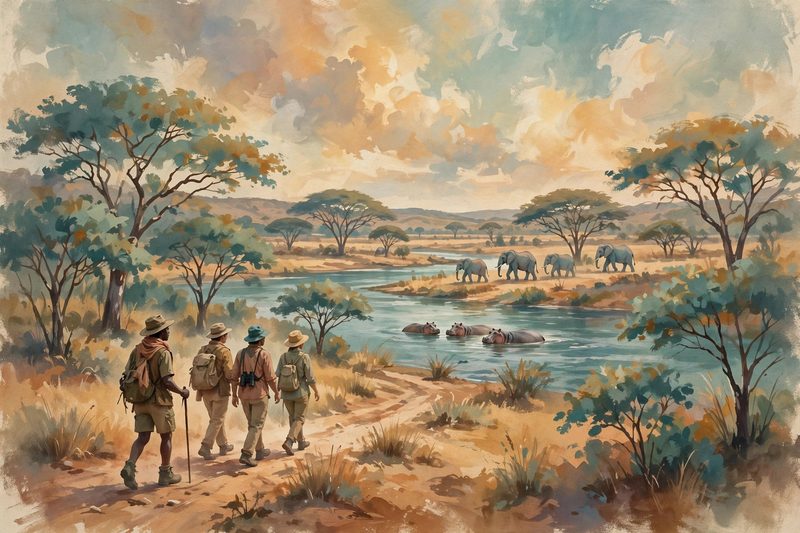
The birthplace of the walking safari, known for leopard sightings, wild dogs, night drives, and huge hippo pods on the Luangwa River.
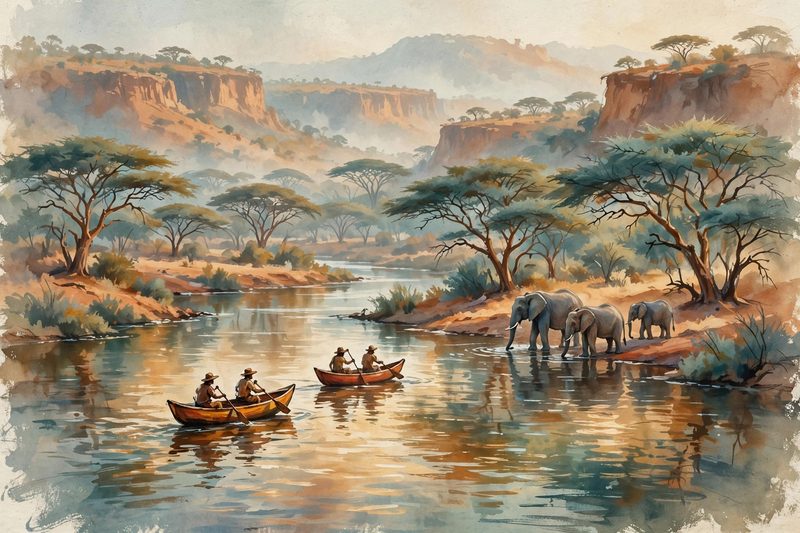
Canoe safaris past elephants on one of Africa's great rivers. Wild dogs are established but unpredictable here; Chiawa Camp was established in 1989 and welcomed its first paying guests in 1991.
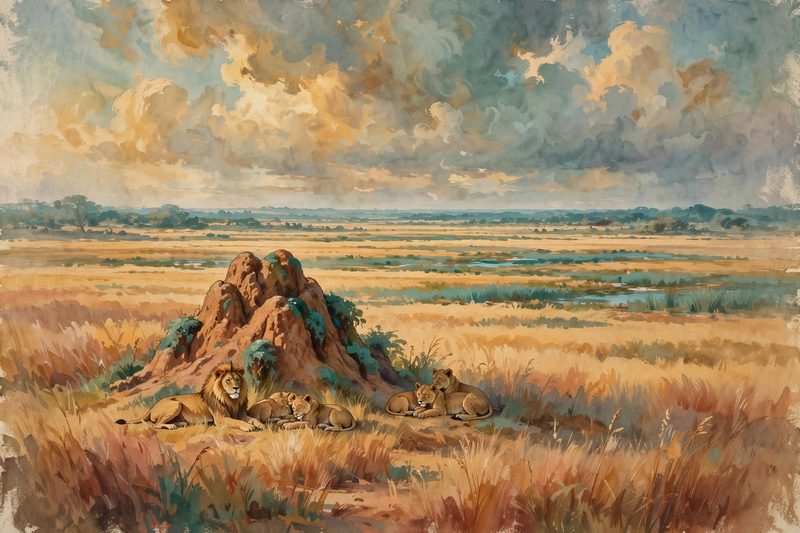
Zambia's largest national park at 22,400 km2: Busanga Plains lions, cheetahs, wild dogs, and genuine solitude. 158 mammal species and 515 birds per African Parks.
Zambia's tourism capital: Grade 5 white-water rafting, the 111-metre bungy, white rhinos minutes from town, curio markets, and the country's oldest museum.
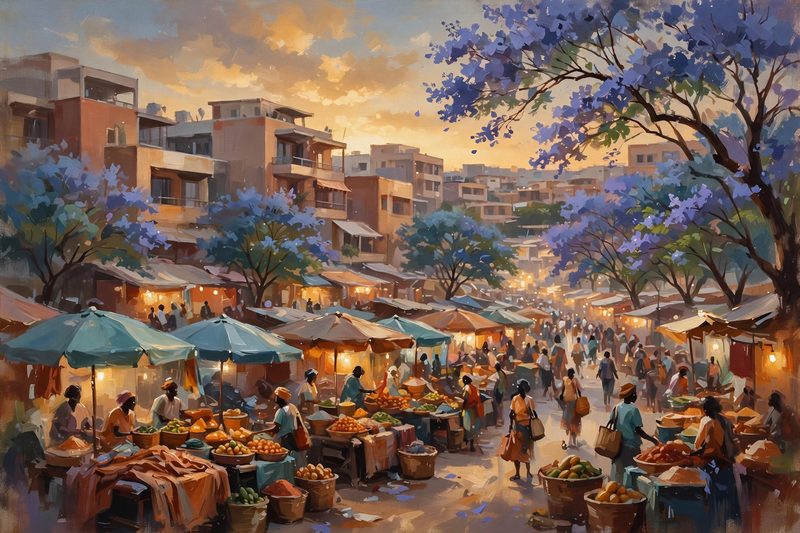
The capital: Soweto Market, the Lilayi Elephant Nursery (11:30 AM feedings), the national museum, and the practical launchpad for every circuit.
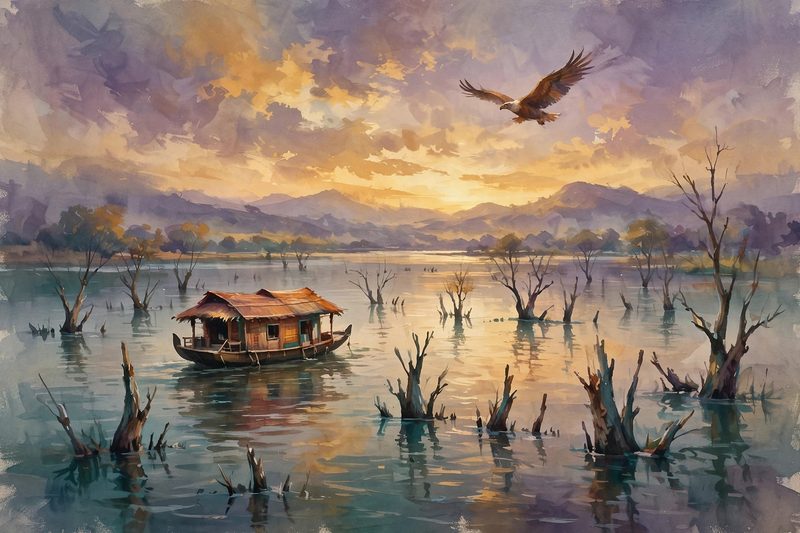
Houseboats and tiger fishing on one of the world's great man-made lakes. The 2026 Kariba International Tiger Fish Tournament runs 7 to 9 Oct at the NAUZ Charara Site.
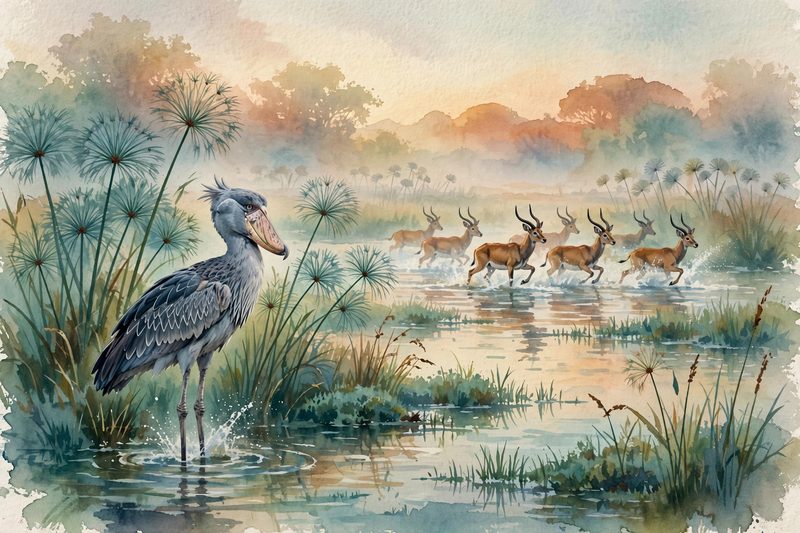
Community-managed wetlands up to about 16,000 km2: shoebill storks (Mar-Apr or May-Jul, water-level dependent) and over 50,000 black lechwe per African Parks.
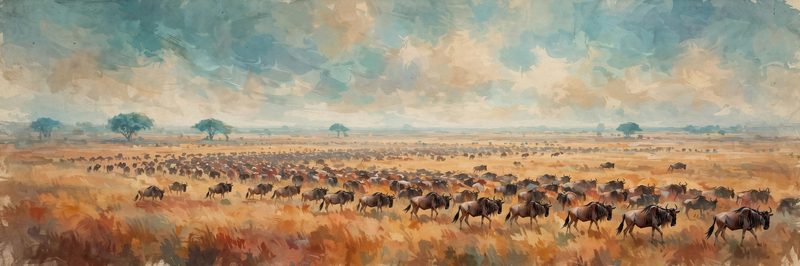
The wildebeest migration's quieter cousin: an estimated 45,000 animals, with a fraction of the Serengeti's visitors.
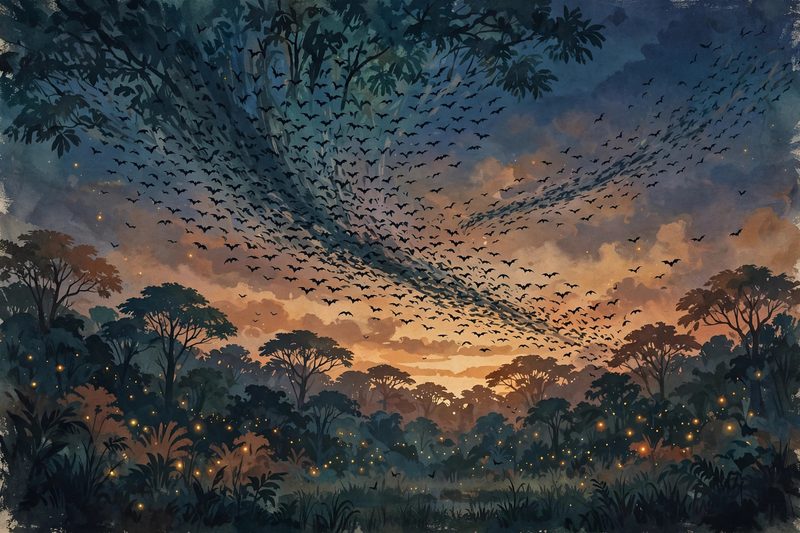
The straw-coloured fruit bat gathering, October to December. Published accounts span 1M to 12M bats; the park lodges are Wasa and Luwombwa.
Walking-only wilderness with no crowds. Home to Zambia's only protected black rhino population, which we keep qualitative for anti-poaching reasons.
Plan your trip
Two seasons, one falls water cycle, and the rule of thumb for first safaris versus Devil's Pool trips.
Gateway airports, Proflight hops, and why flying beats driving the Great East Road.
The KAZA Univisa, malaria prophylaxis, the Level 1 advisory, and kwacha on the ground.
Overview
Zambia is a landlocked country in south-central Africa, about the size of Texas and France combined, with roughly 20 million people and eight neighbours. It takes its name from the Zambezi River, which forms its southern border and drops 108 metres at Victoria Falls. Independent from Britain since 24 October 1964 (as Northern Rhodesia before that), it has a reputation as one of Africa's most politically stable countries, and its motto, One Zambia, One Nation, is something Zambians genuinely live by. English is the official language, and you will hear Bemba, Nyanja, Tonga, Lozi, and dozens of other languages in daily life.
What sets Zambia apart as a travel destination is space and authenticity. The safari industry here was built on walking: Norman Carr pioneered the walking safari in South Luangwa in the 1950s, and Zambia remains the best place in Africa to do one, with night drives also permitted where neighbouring countries restrict them. Visitor numbers are a fraction of Kenya's or Tanzania's, which means the wildlife areas feel genuinely wild rather than managed for crowds.
Why Zambia, why now
The classic Zambia trip has a clear spine. Fly into Lusaka or Livingstone, spend two to three days at Victoria Falls and in Livingstone town, then fly to Mfuwe for four to five days in South Luangwa, and optionally add the Lower Zambezi or Kafue. Domestic hops on Proflight Zambia stitch the circuit together.
- Walking safaris: invented here in the 1950s; Zambia is still the finest place in Africa to track big game on foot with a licensed guide and armed scout.
- Night drives: standard in Zambian parks, opening up leopards, hyenas, and nocturnal species that day-only parks miss.
- Victoria Falls: one of the largest curtain waterfalls on earth, with the Zambia side offering the closest-to-the-water viewpoints plus Devil's Pool and Livingstone Island.
- Kasanka's bats: a vast straw-coloured fruit bat gathering, October to December. Older accounts cite 8 to 12 million; a 2023 camera-and-AI study estimated about 750,000 to 1 million bats per night. We publish the range: 1M to 12M.
- Liuwa Plain: an estimated 45,000 wildebeest in a migration with a fraction of the Serengeti's visitors.
- Water-based safari found nowhere else at this scale: canoe safaris on the Lower Zambezi, houseboats on Lake Kariba, the Bangweulu wetlands.
- Stability: one of Africa's most stable democracies, and Zambians are famously welcoming. The country markets itself, fairly, as the warm heart of Africa.
When to go
Dry season, May to October: safari season. June to September is the sweet spot: mild days, cold nights in June and July, thinning vegetation, animals concentrating at water. October is the hottest month (35 to 38C in the valleys) with the most dramatic predator viewing as prey clusters at shrinking water sources, but it is genuinely hot. Most bush camps operate roughly April/May through mid-November; many close entirely in the rains. Peak season pricing and demand: July and August.
Green season, November to April: the rains. Mid-November to March brings heavy rain, lush landscapes, newborn animals, superb birding (migrants arrive), far lower prices, and very few tourists. The trade-offs are real: many camps close, roads become impassable, some parks shut completely, and game viewing is harder in thick bush. November is also Kasanka's bat migration peak and the start of Liuwa's wildebeest calving movements.
Victoria Falls water cycle (matters independently of safari season): high water roughly February to May (thunderous, huge spray, poor visibility, Devil's Pool closed); falling water June to August (good balance of power and visibility); low water roughly August/September to January (clearest views; Devil's Pool typically open from mid-August to late December when levels allow, confirm availability with Livingstone Island before booking).
Rule of thumb: first safari trip, June to September. Falls-plus-adventure trip with Devil's Pool ambitions, September to November. Birders and photographers on a budget, the green season.
Getting there
- Kenneth Kaunda International Airport, Lusaka (LUN): the main international gateway. Typical routings from North America and Europe connect via Johannesburg, Nairobi, Addis Ababa, or Dubai. From Lusaka, domestic connections fan out to the parks.
- Harry Mwanga Nkumbula International Airport, Livingstone (LVI): the falls gateway, with direct regional connections (notably Johannesburg) plus domestic hops from Lusaka. If Victoria Falls is the main event, fly here.
- Mfuwe Airport (MFU): the South Luangwa gateway, reached by scheduled domestic flights from Lusaka, about 1 hour 10 minutes. Confirm the exact schedule with Proflight for your dates.
- Proflight Zambia is the domestic carrier linking Lusaka with Livingstone, Mfuwe, and Lower Zambezi airstrips (Jeki, Royal). Timetables are built for safari connections, including tight same-day hops. Charter flights serve remote strips (Kafue, Liuwa, Kasanka).
- Overland: the classic self-drive or bus corridor is Lusaka to Livingstone, about 485 km and 6 to 7 hours by road. Cross-border arrivals from Zimbabwe (Victoria Falls town), Botswana (Kazungula), Namibia, and Malawi are common for multi-country trips.
Getting around
Zambia is vast and the good stuff is far apart, so most visitors fly between regions and drive within them.
- Scheduled domestic flights (Proflight): the backbone of a multi-park trip. Book through your safari operator, who coordinates the hops.
- Safari operator transfers: lodges and camps include road transfers from the nearest airstrip or park gate in their rates. This is the default, not a luxury add-on.
- Self-drive: possible and popular with experienced Africa travellers, but distances are long, fuel stops need planning, and park roads in the rains are for experts only. Drive on the left.
- Buses and minibuses: cheap and extensive between cities (Lusaka to Livingstone from a few dollars), fine for town-to-town legs, not for parks.
- Taxis in towns: negotiate the fare before getting in where there is no meter. In Lusaka and Livingstone, hotel-arranged transfers are the safe default at night.
- Trains: Zambia Railways runs long, slow, dated services (Lusaka to Livingstone is cited at 13-plus hours). An experience, not transport.
Where to stay
Lodging splits into three worlds, and most trips mix them.
- Safari lodges and tented camps (South Luangwa, Lower Zambezi, Kafue): the classic product, usually fully inclusive (meals, drinks, two activities a day, park fees, airstrip transfers). Rough bands per person per night sharing, confirm with operators before booking: mid-range $400 to $700, luxury $800 to $1,500-plus. Zambia has very little true budget safari product; the value play is the green season.
- Livingstone and Victoria Falls area: the full range, from backpacker hostels and guesthouses through mid-range hotels to iconic riverfront lodges. Staying in town versus on the falls road is the main trade-off: town is cheaper with restaurants in walking distance, falls-road lodges cost more and run shuttles.
- Lusaka: business hotels and guesthouses, mostly an overnight stop. Mid-range $100 to $200.
Two names you will see everywhere: the Royal Livingstone (falls-facing, inside Mosi-oa-Tunya park) and Tongabezi (Zambezi river lodge upstream of the falls). Royal Livingstone is confirmed operating under the Anantara brand; Tongabezi's 2026 operating status is unconfirmed, so verify directly before booking.
Food and drink
- Nshima: the staple and the national dish in practice. Thick maize-meal porridge, rolled into balls with the right hand and used to scoop ndiwo (relish): leafy greens like rape or pumpkin leaves, beans, dried fish (kapenta), or meat gravy. Ifisashi is greens cooked in groundnut (peanut) sauce. If a Zambian says they have not eaten after a snack, they mean they have not had nshima.
- Street and market food: vitumbuwa (fried dough fritters), grilled maize, michopo (grilled meat, usually goat or beef) with drinks at local bars.
- Chikanda: the famous African polony, a savoury cake made from wild orchid tubers, peanuts, and chilli. Worth trying; harvesting pressure on the orchids is a real conservation concern, so treat it as a delicacy, not a staple.
- Drinks: Mosi lager is named for Mosi-oa-Tunya and is a popular local beer; Zambezi lager is the other local mainstay. Fresh fruit juices are everywhere in towns. Safari lodges include local drinks in their rates; imported spirits cost extra.
- In the bush: camps feed you well and copiously. Dietary needs are routinely handled if you warn the operator in advance.
Practical: visa, health, safety, money
- Visa: Zambia's single-entry visa is US$50 ($50.50 by card), with new fees in force from 1 January 2026. Verified Oct 2026. Zambia has waived visas for a long list of nationalities, but the exact country list and stay terms vary in published sources, so check the Zambian Department of Immigration's current roster before booking. The KAZA Univisa is listed at US$50 and permits multiple visits between Zambia and Zimbabwe for up to 30 days, plus qualifying day trips to Botswana through Kazungula; check your passport's eligibility before travel.
- Health: malaria is present countrywide, all year, including all safari areas and the falls. Take prophylaxis (CDC lists atovaquone-proguanil, doxycycline, mefloquine, tafenoquine; decide with a travel clinic). A yellow fever certificate is required only if arriving from a yellow-fever-risk country, including transits over 12 hours; Zambia itself is not on the WHO risk list. Tsetse flies in the Luangwa and Zambezi valleys can transmit sleeping sickness: wear neutral-coloured long sleeves and trousers, check vehicles before getting in. Do not swim in lakes and slow rivers (schistosomiasis/bilharzia risk). Drink bottled or treated water. Hepatitis A and typhoid vaccination are commonly advised; confirm with a clinic 6 to 8 weeks before departure.
- Safety: Zambia is currently listed as Level 1, exercise normal precautions, on the US State Department advisory page, which is dated 31 July 2023; this is not a fresh 2026 assessment. The realistic risks are petty theft and bag snatching in cities, ATM and currency scams, and road safety, especially driving at night when livestock and unlit vehicles are hazards. Avoid walking after dark in Lusaka and Livingstone townships; use hotel-arranged transport. In parks, follow guide instructions exactly: never exit the vehicle unless told, and be back at camp by gate times.
- Money: the Zambian kwacha (ZMW). Bank of Zambia rules effective 26 December 2025 require kwacha for covered domestic payments, including payments by tourists to resident businesses, subject to stated exemptions; available official material does not establish how consistently this is enforced on the ground. Carry kwacha for everyday spending. USD is widely accepted in the tourism sector; bring recent-series notes in small denominations. Visa and Mastercard work in cities, at airports, and at most lodges (some add a processing fee); ATMs in Lusaka, Livingstone, and larger towns dispense kwacha, mostly Visa-friendly. Outside the cities, assume cash only.
- Language: English is official and widely spoken in tourism. Bemba is the most widely spoken local language, with Nyanja, Tonga, Lozi, and 70-plus others. A greeting in the local language earns real warmth.
- Connectivity: buy a local SIM (Airtel, MTN, Zamtel) at the airport for data; eSIM options exist. Coverage is good in cities and along main roads, patchy to absent in parks, which is part of the point. Lodges have Wi-Fi of varying quality; remote camps may offer it only in common areas or not at all.
- Power: 230V, plug types C, D, and G. Load shedding happens; lodges run generators or solar, sometimes not 24 hours.
Travel gently
- Zambia's best conservation stories are community-shaped. Bangweulu's wetlands are managed with local communities; Kasanka is run by the Kasanka Trust; several Game Management Areas around the parks channel revenue to nearby villages. Ask operators how their concession benefits local people, and prefer the ones with a clear answer.
- Walking safaris and canoe safaris are inherently low-impact. Keep them that way: stay with your guide, never approach wildlife on your own, never feed animals.
- Water is precious in the dry season. Camps truck or pump it; keep showers short without being asked.
- Single-use plastic is a visible problem in towns. Carry a refillable bottle; safari vehicles and lodges provide drinking water.
- If you try chikanda, know the wild orchid tubers face harvesting pressure; enjoy it as the delicacy it is.
- Tipping: safari custom is roughly $10 to $20 per guest per day for the guide and $5 to $10 for camp staff, usually via a communal tip box (confirm 2026 norms with your operator). In city restaurants, about 10 percent is accepted.
How this guide works
This guide is built from ground-truth research and web-verified against current sources. Figures marked Verified Oct 2026 were checked that month. Anything still unresolved is either omitted or carries a plain confirm with the operator before booking, because prices, dates, and rules move in Zambia. We do not publish a figure we cannot stand behind; when sources conflict, we say so on the page. Each destination below has its own deep-dive with the full detail.
Questions, answered honestly
How many days do I need for Zambia?
Ten to fourteen days for the classic circuit: 2 to 3 at the falls, 4 to 5 in South Luangwa, 3 to 4 in a second park (Lower Zambezi or Kafue). A week works for falls plus one park. Anything less and you will spend it in transit.
Is Zambia good for a first safari?
Yes, with one caveat: it is less hand-holding than Kenya or Tanzania and more expensive per day at the mid-range, because the product is small camps and fly-in logistics. What you get is the real thing: walking safaris, night drives, and very few other vehicles.
Can I combine Zambia with Zimbabwe or Botswana?
Easily. The KAZA Univisa is listed at US$50 (Verified Oct 2026) and permits multiple visits between Zambia and Zimbabwe for up to 30 days, plus qualifying day trips to Botswana via Kazungula. Check your passport's eligibility before travel. Multi-country itineraries are standard operator fare.
When can I swim in Devil's Pool?
Typically from mid-August to late December, depending on river levels and guide safety assessments; confirm availability with Livingstone Island before booking. Book through the operator; it is not a DIY swim.
Is Zambia safe for solo travellers, including women?
Most visits are trouble-free and Zambians are notably welcoming. The standard precautions apply: arrange transport rather than hailing at night, keep valuables out of sight, avoid walking after dark in cities. Safari camps are well set up for solo travellers, though single supplements apply.
What is the single biggest mistake first-timers make?
Trying to drive it all. Distances are huge, park roads punish the unprepared, and the fly-in model exists for a reason. Spend the flight money; spend your days on safari, not on the Great East Road.