Why visit
Lower Zambezi slopes from the Zambezi Escarpment down to the river, ending in a floodplain of winterthorn (ana) trees, sausage trees and lagoons where most of the large mammals gather. Directly opposite sits Zimbabwe's Mana Pools National Park, one of Africa's great wildlife viewsheds, and the two parks form one contiguous ecosystem. Elephants cross between the banks daily despite the current.
Before its 1983 national-park designation, the area was generally described as a private game reserve of Zambia's presidency; Kenneth Kaunda reportedly used it as a retreat. Its precise legal status is unclear. The Cumings family pioneered tourism here, establishing Chiawa Camp in 1989; Chiawa Safaris says the camp welcomed its first paying guests in 1991. Because only licensed operators work here, and lodge numbers are low, visitors generally see very little human activity.
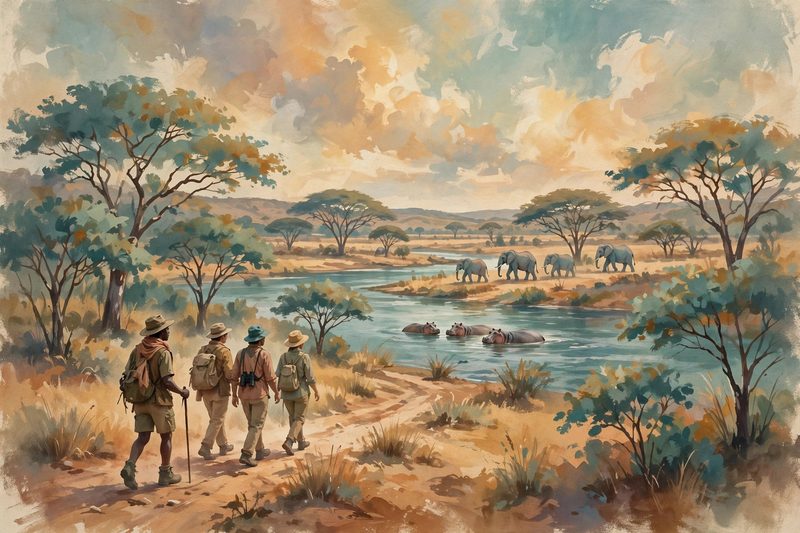
The park's signature is water-level safari: canoe trips, boat cruises and tiger fishing, combined with game drives and walking. Two honest gaps: giraffe do not occur in the park, and cheetah are rare to occasional visitors. Wild dogs are established here, including the Jeki lineage, but sightings are unpredictable rather than guaranteed.
Signature experiences
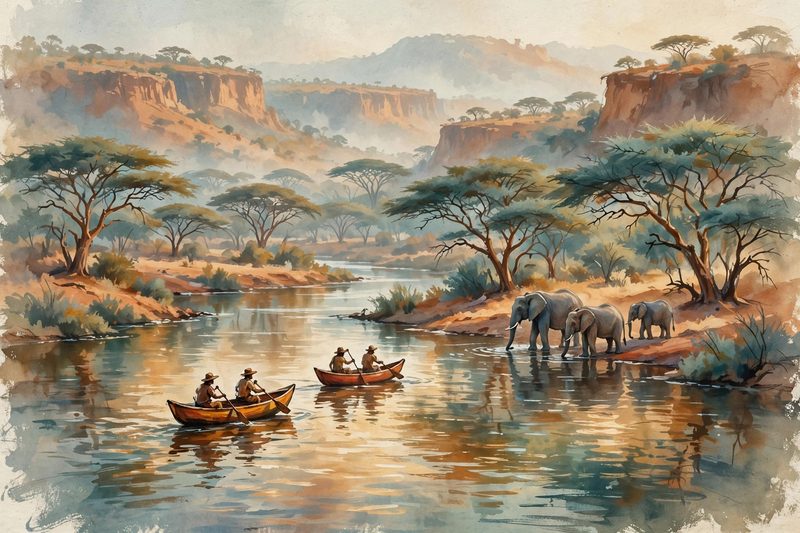
- Canoe safaris: silent, guided paddling through side channels beside elephants, hippos and crocodiles, usually a paddle downstream combined with a game drive back.
- Elephants in camp: herds move through the winterthorn forests and sometimes through the lodges themselves; large herds, up to around 100 animals reported, are drawn by winterthorn pods August to October.
- The escarpment-to-river gradient: miombo woodland, mopane slopes and floodplain in one park, the rugged escarpment funnelling wildlife to the river.
- Mana Pools views: one of Africa's great contiguous habitats, with elephants swimming the Zambezi between the two parks.
- Tiger fishing: explosive strikes and aerial leaps, one of the continent's great freshwater fights. September and October are often recommended; November may also fish well but can be less predictable as rains begin. Strict catch and release at reputable camps.
- Birdlife: 350 to 400 species including African fish eagle, Pel's fishing owl and carmine bee-eaters.
Seasonality
Dry season, May or June to October, is prime. Game concentrates along the riverbanks as inland water dries, and conditions suit drives, walks, canoes and boats. June to September is the sweet spot for canoeing and walking. September and October are often recommended for tiger fishing.
Green season, November to April, brings lush landscapes, excellent birding and fewer visitors, but roads can become impassable and many camps close during the rainy season, generally reopening around late March or April; dates vary by property, so confirm per operator. Lolebezi and Royal Zambezi are listed as year-round options in the park. Water-based activities like boat cruises run well for much of the year. Most in-park camps operate approximately April to November.
Transport
Getting there: fly to Lusaka, then take a light-aircraft charter to Jeki Airstrip or Royal Airstrip. Lusaka to Jeki takes about 35 minutes; Royal takes longer, with published estimates varying. Some operators link Lusaka to South Luangwa and on to the Lower Zambezi by scheduled charter. Road transfers from the airstrips to lodges are short, typically 20 minutes to an hour. Self-driving from Lusaka is possible in a capable 4x4 in the dry season; allow at least about 5 hours, with 7 hours plausible on the rough route. Most visitors fly.
Getting around: game drives in open 4x4s, guided walking safaris, canoe trips, boat cruises, and catch-and-release tiger fishing. Boat transfers between lodges double as game viewing. Organized transfers are essential and usually bundled into lodge packages.
Budgets and where to stay
Almost entirely high-end lodges and tented camps along the river; this is not a budget destination. Rough bands per person per night, full board with activities: luxury lodges typically $700 to $1,500 and above in peak season. A few more accessible options exist in the surrounding game management areas. Confirm all rates before you go.
One activity source lists canoeing at $20, boating at $20 and angling at $30 per person per day, each on top of park entry; the park-entry amount is not stated there, while one budget tour lists a $30 park-entry charge. Park fees for 2026 are unconfirmed: confirm current rates with DNPW and your camp before travel.
Iconic camps (all named in published sources):
- Chiawa Camp: the Cumings family's pioneering camp, established in 1989, with first paying guests in 1991, on a prime stretch of river.
- Anabezi Camp: luxury tented camp known for elephants moving through camp and strong guiding.
- Chongwe (Time + Tide): at the confluence of the Chongwe and Zambezi rivers, under winterthorn canopy, with classic tents, suites and a private house option.
Risks and local rules
- Visa: Zambia single-entry visa is US$50 ($50.50 by card), with new fees in force from 1 January 2026. Verified Oct 2026. The KAZA Univisa is also US$50 for eligible nationalities, covering multiple visits between Zambia and Zimbabwe for 30 days plus day trips to Botswana via Kazungula, but it is not issued at Lower Zambezi National Park, so arrange it at an eligible arrival point.
- Health: malaria prophylaxis is essential. Tsetse flies occur in the area; neutral clothing and repellent help. A yellow fever certificate is required if arriving from an endemic country.
- Safety: remote and roadless by design. Camps brief guests on wildlife in camp, including elephants and hippos at night. Canoe safaris are guided with safety protocols for hippos and crocodiles. Do not swim in the river.
- US advisory: Zambia is currently listed as Level 1, exercise normal precautions; that listing is dated 31 July 2023, with no fresh 2026 assessment.
- Money: Zambian kwacha. Zambia's rules require kwacha for covered domestic payments to resident businesses, subject to stated exemptions; how consistently this is enforced in practice is unclear. Lodges may quote in US dollars and take cards, but carry cash for tips and extras. No ATMs in the park; draw cash in Lusaka.
- Connectivity: limited. Lodges have Wi-Fi of varying reliability; none on the river or in the bush.
Travel gently
The park's low-density model is its conservation story: tourism revenue gives the floodplain economic value against poaching pressure. One operator says boat numbers on the river are strictly regulated, though the limits and the enforcer are unconfirmed; ask your lodge for current details. Canoe and walking safaris are inherently low impact, and tiger fishing is strictly catch and release at reputable camps.
Ask operators about their anti-poaching contributions; the reputable ones fund them directly. Keep to seasonal access windows, and never press a guide for the location of sensitive wildlife.
Next in the Zambia guide
Questions, answered honestly
Is canoeing safe with hippos and crocodiles around?
Canoe safaris are guided by professionals who read the water constantly and keep distance from hippo pods. The risk is managed through routing and experience, and reputable operators have strong safety records. Follow instructions exactly.
How is Lower Zambezi different from South Luangwa?
Water defines it. Canoes, boats and fishing replace some of the walking emphasis, the escarpment gives it different scenery, and it is even lower density. South Luangwa has stronger leopard viewing and walking pedigree.
Can I see Mana Pools from the Zambian side?
Yes, across the river. The two parks form one ecosystem and elephants cross regularly. Visiting both sides requires separate arrangements and border formalities.
How many days do I need?
Three to four nights minimum to experience drives, a canoe trip, a boat cruise and fishing. Longer stays suit anglers and photographers.
Is it suitable for children?
Many lodges welcome families, but canoe safaris usually have minimum age requirements. Check with the camp about ages for each activity.
Why are there no giraffe?
Giraffe simply do not occur naturally in this part of the Zambezi valley. It is one of the park's honest gaps; wild dogs are established but unpredictable to see, and cheetah are rare.