Why visit
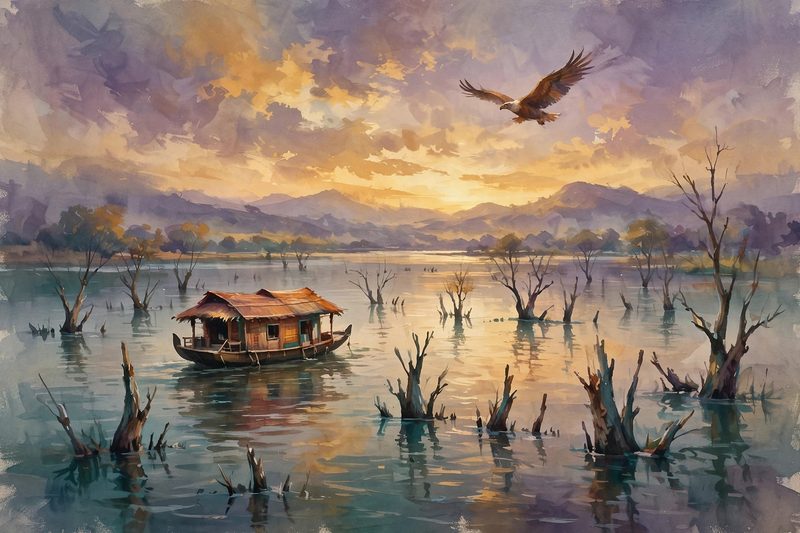
Lake Kariba is often described as the world's largest man-made reservoir by volume. (Lake Volta is larger by surface area, so phrase the claim carefully.) On the Zambia side, the town of Siavonga is the gateway: low-key, friendly, and the departure point for houseboats. The houseboat is the definitive Kariba experience. These floating lodges, from basic pontoons to multi-deck luxury vessels, drift the shoreline for days at a time: fishing at dawn, game viewing from the upper deck, and the famous sunset with a cold drink as the sky goes orange over the water. Anglers come for tiger fish, Africa's great freshwater sport fish, with razor teeth and a spectacular aerial fight. Photographers come for the drowned forests, the dead trunks rising from the lake like masts, best shot in low morning light. After dark, the kapenta rigs of the sardine fishing fleet glitter across the water, a working lake doing its night shift. And the Kariba Dam wall itself, a 1959 double-arch concrete dam, anchors the story of the lake's building, including Operation Noah's wildlife rescue.
Signature experiences
- Houseboat cruise: three to five nights is the classic trip; days fishing and exploring, evenings anchored in a quiet bay for the sunset. The houseboat is the transport, the mother ship cruising slowly between bays while a tender boat handles fishing runs and shore excursions.
- Tiger fishing: dawn and dusk sessions from the tender boat. Fish up to 15 kg are reported, though most catches are smaller. Ask your operator about catch-and-release policy when booking.
- Sunset from the upper deck: the lake's signature moment, non-negotiable, genuinely among the best sunsets in Africa.
- Kapenta rigs at night: the sardine fleet's lights spread across the dark water.
- Drowned forests: dead trunks rising from the lake, photographed best in low morning light.
- Kariba International Tiger Fish Tournament: scheduled for 7-9 October 2026 at the NAUZ Charara Site on Lake Kariba. (Verified Oct 2026.)
- Shore wildlife: elephants drinking at dusk, fish eagles, and the birdlife of the bays, all viewed from the boat.
- Kariba Dam wall: ask local authorities or operators whether viewpoint access is currently available before visiting; public access is unconfirmed for 2026, so confirm before you go.
Seasonality
Dry season, May to October: the main season. April to May are the cooler months; June to October is the best window for wildlife viewing along the shore. Houseboats run year-round but book out in this period.
Hot months, September to November: temperatures can top 35 C. This is when tiger fish are most active and aggressive, making it the prime fishing window. Trade-off: real heat, and the shoreline at its lowest and dustiest.
Green season, November to April: afternoon storms, lush scenery, fewer visitors; January is typically the wettest month. Some operators reduce schedules, so confirm availability before booking.
Water levels: the lake's level moves with the rains and with power-generation releases. The 2024 El Nino drought pushed live storage to critically low single digits. The latest supplied official reading is dated 28 September 2026: 480.97 m and 39.09 percent usable storage, with levels receding. That is not a live reading, so check the Zambezi River Authority's latest update and confirm navigability directly with your houseboat operator before booking.
Getting there and getting around
Getting there: Siavonga, the Zambian gateway town, is roughly a 3-hour drive south of Lusaka on a good tar road. Actual travel time depends on traffic and road conditions, so check locally before departure. Most Zambia-side houseboats and lodges arrange transfers from Lusaka on request. On the Zimbabwe side, Kariba town has its own airport with charter connections from Harare and Victoria Falls; scheduled options are limited, so most visitors self-drive (about 5 hours from Harare, roughly 370 km) or charter. The two sides do not connect by regular ferry for tourists; pick a side and plan around it. No specific fares are quoted here; confirm before you go.
Getting around: on a houseboat trip, the boat is the transport. Lodges in Siavonga arrange road transfers, dam-wall visits, and fishing outings. Self-driving the Zambia side is straightforward on tar as far as Siavonga; beyond that, tracks to fishing camps need clearance and local knowledge. Cross-lake travel between the Zambian and Zimbabwean shores is not a casual hop; treat them as separate trips.
Where to stay and budgets
Areas: Siavonga town for lodges, restaurants and the dam-wall road; houseboats departing from Siavonga for the full lake experience; Sinazongwe further along the shore, known for tiger fishing.
Houseboats: the houseboat itself is the iconic stay; book by vessel reputation, not just price. Rates vary by vessel and season. Houseboat pricing is inconsistent across sources, so request current vessel-specific whole-boat quotes directly from the operator and confirm in writing whether fuel, catering, drinks, permits and other fees are included. We do not publish a verified per-person rate; confirm before you go.
Lodges: lakeside lodges in Siavonga run roughly $80 to $250 per night (confirm current rates for 2026). Established options include Lake Kariba Inns in Siavonga (family-friendly, on the water, with the Fish Bowl restaurant) and Lake Safari Lodge (Simamba Road, Siavonga).
Rough daily planning figures for October 2026, per person excluding international flights: about US$40 low, about US$164 mid-range, about US$200 as a luxury proxy. These are package-derived estimates, not itemized budgets, and park, fishing and conservation fees are not reliably itemized; get written quotes and confirm what each figure includes.
Risks and local rules
- Visa: the KAZA Univisa (US$50, up to 30 days) permits multiple visits between Zambia and Zimbabwe, plus qualifying day trips to Botswana through Kazungula. (Verified Oct 2026.) Zambia has waived visas for many nationalities; Zimbabwe has its own regime. All visa details: verify 2026 before travel.
- Health: the lakeshore is a high malaria-risk area. Prophylaxis is strongly advised, plus repellent and nets.
- Water safety: as a precaution, avoid swimming, wading, or bathing in Lake Kariba or other freshwater; use only chlorinated pools. Crocodiles and hippos are present throughout the lake, and schistosomiasis (bilharzia) may be present in still, shallow water. Confirm itinerary-specific medical advice with a travel-medicine clinician. On a houseboat, swim only where the crew says so.
- Safety: the lake itself is the main hazard, not crime. Wear life jackets on tender boats, respect the crew's rules, and never approach hippos or crocodiles. Siavonga is a quiet town; normal travel precautions apply. The US State Department currently lists Zambia at Level 1 (advisory dated 31 July 2023, no fresh 2026 assessment).
- Fishing licenses: required for angling; reputable houseboat operators arrange them. Confirm catch limits and whether your trip is catch-and-release or catch-and-keep.
- Money: kwacha (ZMW) on the Zambia side. Houseboats and lodges are often quoted in USD, but Zambia requires kwacha for covered domestic payments; enforcement consistency is unclear. Small operators and markets want cash kwacha. ATMs in Siavonga are limited; draw cash in Lusaka.
- Language: English is official; Tonga is the local language of the valley people on both shores.
- Connectivity: patchy to nonexistent once on the water. Some luxury boats carry WiFi; otherwise expect a proper digital detox. Lodges in Siavonga have WiFi.
Travel gently
Tell the dam story straight: 57,000 Tonga people were resettled for this lake, many into poorer land, and anthropologist Thayer Scudder's long-term work describes many as still 'development refugees.' Visiting with that knowledge, and spending with Zambia-side operators and fishing communities, is the respectful way to do Kariba. Kapenta and inshore fisheries support thousands of livelihoods but face overfishing pressure; buy fish from licensed local fishers, respect closed areas, and follow your guide on catch limits. Do not buy curios made from obviously poached wildlife products.
Next in the Zambia guide
Questions, answered honestly
Zambia side or Zimbabwe side?
Both work; they are different trips. The Zambia side (Siavonga) is quieter, cheaper, and logistically simpler from Lusaka. The Zimbabwe side (Kariba town) has more houseboat operators and Matusadona National Park on its doorstep. There is no casual cross-lake ferry; choose one.
How many nights should I spend on a houseboat?
Three to five nights is the sweet spot. Two nights feels rushed once you factor in boarding and the slow cruising pace; a week suits anglers and anyone who wants to properly unwind.
Is tiger fishing catch and release?
It depends on the operator and the water. Many boats encourage release of large breeding fish and keep smaller ones for the table. Ask when booking, and respect the crew's call on the day.
Can I swim in the lake?
Avoid swimming, wading, or bathing in Lake Kariba or other freshwater as a precaution; use only chlorinated pools. Crocodiles and hippos are present throughout the lake, and bilharzia may be present in still shallow water. On a houseboat, swim only where the crew says so.
When is the tiger fishing competition?
The 2026 Kariba International Tiger Fish Tournament is scheduled for 7-9 October at the NAUZ Charara Site on Lake Kariba. (Verified Oct 2026.) No Sinazongwe-specific competition is confirmed here.
What happened to the people who lived where the lake is?
About 57,000 Tonga people were resettled when the valley was flooded between 1958 and 1963. It remains one of Africa's most studied and contested dam displacements. The honest version belongs in any Kariba visit.