Why visit
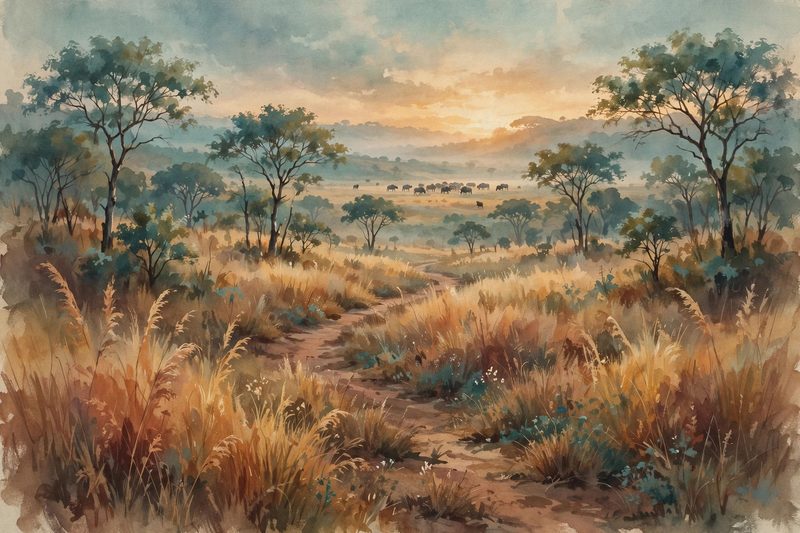
North Luangwa National Park covers 4,636 square kilometres in the northern Luangwa Valley, in the oldest section of the Great Rift Valley. It began as a game reserve in 1938 and was re-gazetted as a national park in 1972. It is conserved through a long-term partnership between Zambia's Department of National Parks and Wildlife and Frankfurt Zoological Society; the North Luangwa Management Company handles park management.
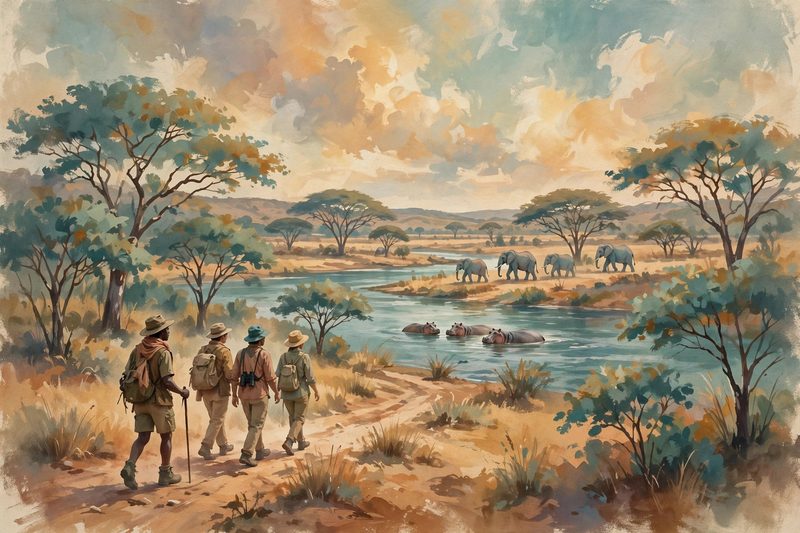
This is a walking park. There are few roads, game drives are limited (permitted on the north bank of the Mwaleshi River; the south bank is walking only), and the core experience is exploring on foot with a professional guide and an armed scout, following animal trails through pristine savannah. At any one time there may be only two or three groups moving through the entire park.
North Luangwa is home to Zambia's only black rhino population. Zambia's rhinos were poached to near-extinction by the mid-1980s and declared nationally extinct in 1998; reintroduction to North Luangwa ran from 2003 to 2010, and the population is now carefully monitored and protected under tight security. Exact numbers are deliberately unpublished. The Mwaleshi area sits within the rhino sanctuary.
Signature experiences
- Multi-day walking safaris with some of Africa's most experienced walking guides, in country with no vehicle tracks, typically two walks a day.
- The rhino sanctuary: sightings are rare, one operator's guest data shows effectively zero, but the conservation story is the point.
- Cookson's wildebeest: a wildebeest subspecies endemic to the Luangwa Valley, abundant around the Mwaleshi and more likely to be seen here than anywhere else.
- Wild dog packs and lion prides tracked on foot, plus hyenas known here for pack hunting rather than scavenging.
- The canoe crossing into Takwela, and the camp-to-camp walk from Mwaleshi for strong walkers.
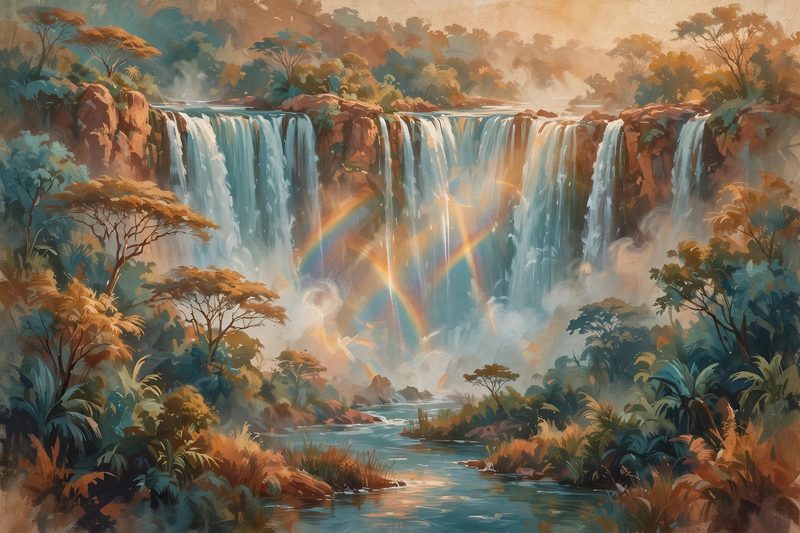
- Birding with species at the edge of their range, including some East African species unusual for the valley. A 4x4 day trip to Mwaleshi Falls may be available; confirm with the camp when booking.
Seasonality
Camps operate roughly mid-June to end of October (Mwaleshi: 15 June to 31 October; Takwela: 15 June to 31 October). This is the dry season and the only practical window.
November to May: the park is effectively closed to tourism. Heavy rains make roads impassable and the camps are dismantled for the season. September and October are hot but excellent for game concentration as water shrinks.
Transport
Getting there: almost everyone arrives by air. Fly Lusaka to Mfuwe (Proflight lists direct flights, scheduled for about 1 hour 10 minutes; check the timetable for your dates), then charter to Mwaleshi airstrip: about 35 to 40 minutes from Mfuwe, about 30 minutes from Lukuzi airstrip near South Luangwa's Tafika. Remote Africa Safaris charters with RASAIR (Cessna 210); direct Lusaka to Mwaleshi is about two and a half hours. Charter luggage limit is 20 kilograms per person in soft bags. From Mwaleshi airstrip it is a 45-minute game drive plus a short canoe crossing and walk to reach Takwela Camp. Charter fares could not be verified for 2026; request a current quote from the operator.
Overland access exists via the transit road through the park toward the Muchinga side, but it is recommended only for experienced overlanders or guided expeditions. Do not attempt it casually.
Getting around: on foot, with a professional guide and an armed scout, typically two walks a day. Vehicles are used to reach walking areas further afield and for limited game drives, including occasional night drives. Expect to walk several kilometres daily over uneven ground; a reasonable fitness level is required.
Budgets and where to stay
Current sources identify Mwaleshi and Takwela as North Luangwa's two main safari camps; whether a third camp is operating in 2026 is unconfirmed. Both are run by Remote Africa Safaris.
- Mwaleshi Camp: four thatched chalets rebuilt annually from natural materials, en-suite bathrooms open to the stars, on a scenic bend of the Mwaleshi River within the rhino sanctuary. Solar powered, no wifi, no mobile coverage. Children 12 and over only. Listed 2026 rates US$580 to $660 per person per night, varying by season; confirm directly with Remote Africa Safaris.
- Takwela Camp: four chalets for a maximum of eight guests, at the confluence of the Luangwa and Mwaleshi rivers, opened in 2019. Similar ethos: solar, local materials, walking-focused, with day and night game drives also offered. Listed 2026 rates US$645 to $760 per person per night, varying by season; confirm directly with Remote Africa Safaris.
Remote Africa's 2026 seven-night Tafika (South Luangwa) plus Takwela package is listed at about $6,540 per person sharing in June and July and about $7,750 in August to October, including park fees, full board, activities, and conservation contributions; confirm before you go. Park entry and vehicle fees for 2026 could not be settled from available sources; confirm current charges with DNPW and your camp before travel.
Risks and local rules
- Visa: Zambia single-entry visa is US$50 ($50.50 by card), with new fees in force from 1 January 2026. Verified Oct 2026. The KAZA Univisa is also US$50 for eligible nationalities, covering multiple visits between Zambia and Zimbabwe for 30 days plus day trips to Botswana via Kazungula; check eligibility and entry rules before travel.
- Health: malaria is present year-round throughout Zambia; prophylaxis is essential. Tsetse flies occur in the valley; children tend to react more strongly to bites. The nearest doctor-level care is far away; medical evacuation insurance is a prerequisite.
- Safety: children under 12 are not accepted at these camps, and for good reason. This is big-game country on foot. Follow guide instructions exactly, never walk unescorted, and be honest about your fitness.
- US advisory: Zambia is currently listed as Level 1, exercise normal precautions; that listing is dated 31 July 2023, with no fresh 2026 assessment.
- Money: camps are prepaid through operators in US dollars; confirm payment arrangements, as Zambia requires kwacha for covered domestic payments to resident businesses, subject to exemptions. Carry kwacha for incidentals in Mfuwe or Lusaka. Do not expect card facilities in camp.
- Connectivity: none. No wifi, no mobile coverage at Mwaleshi or Takwela. Tell people at home you will be offline.
Travel gently
North Luangwa stays wild through deliberate restraint: tiny bed numbers, seasonal camps that are dismantled each year, and walking as the primary activity. The Frankfurt Zoological Society partnership funds anti-poaching and the rhino program; bed-night levies at the camps contribute to conservation and community programs, including the Tafika Fund's Football for Wildlife league across remote communities.
Details of the rhino sanctuary are kept quiet to aid anti-poaching. Respect that secrecy: do not press guides for locations, and keep your itinerary off social media until you are home.
Next in the Zambia guide
Questions, answered honestly
Will I see a black rhino?
Probably not, and any honest operator will tell you that. Published guest sighting data from one camp shows effectively zero rhino sightings. Come for the walking, the wilderness, and the conservation story, and treat a rhino as the rarest of bonuses.
I have never done a walking safari. Is North Luangwa too intense?
It is demanding, but the guides are the best in the business at reading both the bush and their guests. That said, first-time walkers may be happier starting with two or three nights in South Luangwa before coming north.
How is this different from South Luangwa?
South Luangwa has more camps, more vehicles, and higher game concentrations. North Luangwa has almost no one, fewer roads, and walking as the point rather than an activity. Many visitors do both: South for density, North for wilderness.
Can I self-drive North Luangwa?
No, not practically. Access is by charter flight to the camps, and activities are guided. Overland transit through the park is for experienced expedition overlanders only.
What fitness level do I need?
You should be comfortable walking several kilometres over uneven ground in heat, twice a day, for several days. Discuss any limitations with the operator before booking.
Is it worth the cost?
These are among the most expensive camps in Zambia, and the experience is correspondingly rare: a vast park, two small camps, expert guides, and walking country with no tracks. If that is what you want, there is nowhere else quite like it.