Why visit
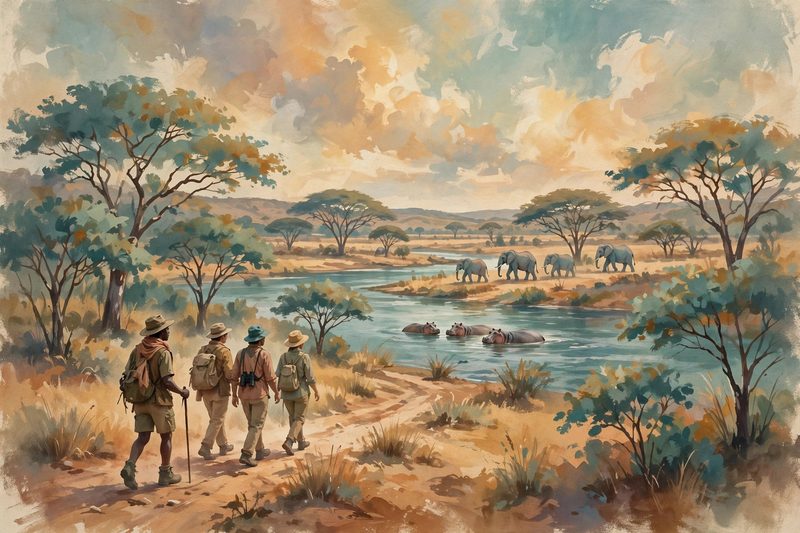
South Luangwa is Zambia's most visited park and, by most safari professionals' reckoning, its finest. Its reputation rests on two pillars. The first is the walking safari, pioneered here by Norman Carr in the 1950s and still the defining experience: morning walks and multi-day trails on foot with a licensed guide and an armed scout, reading tracks rather than chasing sightings.
The second pillar is predators, above all leopards. The valley is often called the Valley of the Leopard, and the Nsefu sector is known for leopard sightings. Night drives, permitted here and rare in most African parks, make those leopards viewable after dark.
South Luangwa is also the stronghold of three animals found only or almost only in the valley: Thornicroft's giraffe, Cookson's wildebeest, and Crawshay's zebra. Four of the Big Five are present. Set expectations on the fifth: black rhinos were poached to near-extinction here by the mid-1980s, and Zambia declared them nationally extinct in 1998. Reintroduced animals now live under tight protection in North Luangwa, reintroduced 2003 to 2010. Cheetah are extremely rare in South Luangwa.
Signature experiences
- Walking safaris: the original on-foot experience, from three-hour morning walks to five-day trails between seasonal bush camps, with luggage transferred by vehicle.
- Night drives: leopards, hyenas, porcupines, civets and genets after dark, with spotlights. Few African parks allow them.
- Leopard viewing: a strong area for sightings, Nsefu especially, with night drives roughly doubling your chances. No honest operator guarantees a leopard.
- Thornicroft's giraffe: the valley's endemic giraffe, distinct in patterning, found nowhere else.
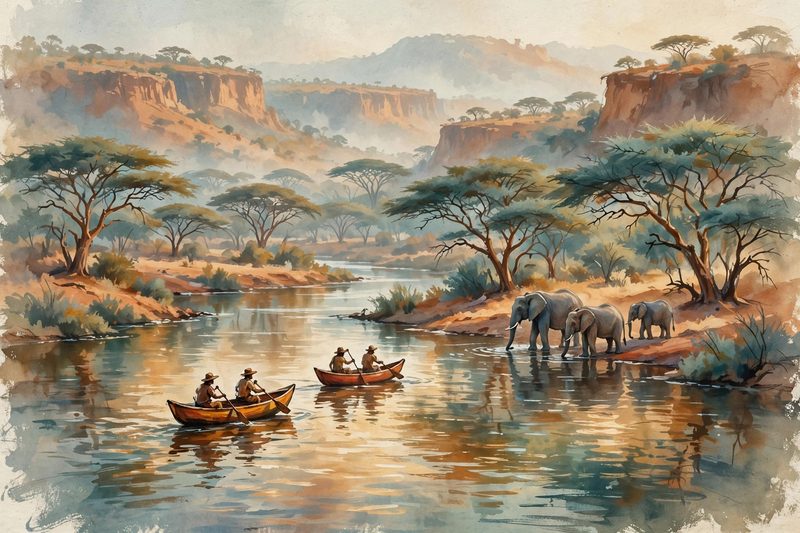
- The Luangwa River: hippo pods numbering in the hundreds, crocodiles, and elephant river crossings at the lagoons.
- Carmine bee-eaters: nesting colonies in the riverbanks, August to October, a wall of pink and teal.
Seasonality
Dry season, May to October, is prime time. As water retreats, game concentrates along the river and lagoons, and visibility improves as the bush thins. June to August is cooler and ideal for long walking safaris. September and October are the hottest months and the best for predator action around dwindling water, but temperatures can be extreme and the air dusty.
Green season, November to April, is a different park: lush, quiet, superb for birding (migrants arrive, 400-plus species recorded) and newborn animals. Several central Mfuwe-area camps are listed as open year round, but confirm directly with each operator. Remote bush-camp closure dates vary by operator, so verify dates for the specific camp and season. Boating safaris may run at some camps in February and March, depending on the camp and conditions; confirm availability with your operator. The wettest months, January and February, are the hardest for game viewing.
Transport
Getting there: fly to Lusaka (Kenneth Kaunda International), then take a scheduled light-aircraft hop to Mfuwe Airport at the park's eastern gate, about 1 hour 10 minutes. Proflight Zambia operates the Lusaka to Mfuwe route; confirm the exact schedule with Proflight for your dates. Charter links also connect Mfuwe with Livingstone and other parks. The road from Lusaka to Mfuwe is long, a full day or more, and most visitors fly. Camps meet guests at Mfuwe with road transfers, usually under an hour to the central lodges.
Getting around: game drives in open 4x4 vehicles, walking safaris with licensed guides and armed scouts, and night drives with spotlights. Multi-day walking trails move between seasonal bush camps, with luggage transferred by vehicle. Boats operate in the wet season months. Self-driving is possible but uncommon for first-time visitors; the guiding is the point here.
Budgets and where to stay
Rough bands per person per night, full board with activities; confirm all rates before you go. Packages that bundle charter flights run higher.
| Band | Indicative rate (Oct 2026) | Notes |
|---|---|---|
| Budget | About US$150 per person per day | Self-catering around Mfuwe village; activities and park entry add up, so this is a floor, not a full trip budget. |
| Mid-range | About US$450 per person per day | Mid-range lodges; one camp's listed 2026 package range ran $397 to $498 per person per night. |
| Luxury | About US$700 per person per day | Luxury lodges from $800 to $1,500-plus per person per night; one bush camp's listed 2026 all-inclusive starting rate was $595, peak $816. |
Park fees: the 2026 tariff is unconfirmed; the published DNPW schedule is still dated 2025. One guide reports $25 per person per day in an operator vehicle, or $30 for self-drivers, with a foreign-vehicle charge possibly extra. Confirm current rates with DNPW and your camp before travel.
Iconic camps (all named in published sources):
- Nsefu Camp (Robin Pope Safaris): established in 1951, moved to its current site in 1953, and still operating. Brick-and-thatch rondavels on a bend of the river, one of Zambia's most storied addresses.
- Mfuwe Lodge (The Bushcamp Company): in the park's most game-rich central area, famous for elephants that wander through reception in season.
- Chinzombo (Norman Carr Safaris): contemporary luxury on the river, from the operator that traces its lineage to Carr himself.
Risks and local rules
- Visa: Zambia single-entry visa is US$50 ($50.50 by card), with new fees in force from 1 January 2026. Verified Oct 2026. The KAZA Univisa is also US$50 for eligible nationalities, covering multiple visits between Zambia and Zimbabwe for 30 days plus day trips to Botswana via Kazungula, but it is not issued at South Luangwa, so arrange it at an eligible arrival point.
- Health: malaria prophylaxis is essential. Tsetse flies occur in the Luangwa Valley; wear neutral colors and use repellent. A yellow fever certificate is required if arriving from an endemic country.
- Safety: the parks are well managed and incidents involving visitors are rare. Standard safari rules apply: stay in the vehicle unless with a guide, never walk unescorted, and follow camp briefings about wildlife in camp (elephants and hippos move through at night).
- US advisory: Zambia is currently listed as Level 1, exercise normal precautions; that listing is dated 31 July 2023, with no fresh 2026 assessment.
- Money: Zambian kwacha. Parks and lodges may quote in US dollars, but covered domestic payments to resident businesses must be settled in kwacha under Zambia's rules, subject to exemptions; how consistently this is enforced in practice is unclear. Cards are accepted at lodges, but carry cash (kwacha and small USD) for tips, park fees and village stops. ATMs exist in Lusaka and Mfuwe town, not in the bush.
- Connectivity: lodges have Wi-Fi of varying quality; expect no signal on game drives or walking trails. Download offline maps.
Travel gently
Walking safaris are low-impact by design: small groups, no vehicles, guides trained to read animal stress signals. South Luangwa has historically received strong anti-poaching investment, which underpins its wildlife densities; your park fees and bed levies fund that protection. Several operators support community projects around Mfuwe; ask camps directly where your money goes rather than assuming.
Respect the seasonal closures of remote bush camps: the closed months let the floodplains and lagoons rest. And keep your distance claims honest when you post photos later: this park's strength is real density, not superlatives.
Next in the Zambia guide
Questions, answered honestly
Is South Luangwa really the birthplace of the walking safari?
Yes. Norman Carr pioneered guided walking safaris here in the 1950s, and the tradition continues with licensed guides and armed scouts. It remains the park's signature experience.
How many days do I need?
Four to five nights minimum: two for game drives and night drives, at least one full walking day. A week allows a multi-day walking trail between bush camps.
Will I see leopards?
Nsefu is known for leopard sightings, especially August to October, and South Luangwa as a whole is strong for leopards. No ethical operator guarantees sightings. Night drives roughly double your chances.
Is it safe to walk with lions and elephants around?
Walks are led by licensed guides backed by armed scouts, with strict protocols. The risk is managed, not zero, which is part of why the experience is meaningful.
Can I visit in the green season?
Yes. Several central Mfuwe-area camps are listed as open year round, but confirm directly with each operator. Expect lush scenery, great birds, newborn animals, fewer visitors, and harder game viewing in thick bush. Remote-camp closure dates vary by operator, so verify dates for the specific camp and season.
How does South Luangwa compare to Kruger or the Serengeti?
Smaller crowds, stronger guiding culture, and walking and night drives you cannot do in many parks, plus strong leopard viewing. It lacks rhino and has almost no cheetah, and infrastructure is simpler.