Why visit
Kafue covers about 22,400 square kilometres of western Zambia, making it the country's largest national park, and it stretches across three provinces. Named for the Kafue River that winds through it, it holds 158 mammal species and 515 bird species (African Parks). Despite its scale and diversity, it remains one of the continent's least visited major parks.
The park divides roughly into north and south. The north holds the Busanga Plains, a vast seasonal floodplain on the Lufupa River that is the park's wildlife crown: thousands of red lechwe, large lion prides, cheetah, wild dogs and leopards, plus wattled cranes and huge bird concentrations. The central and southern park is miombo woodland, dambos and rivers, wilder and thinner on game but rewarding for repeat safari travellers.
Kafue's honest trade: remoteness, a short season, tsetse flies in much of the park (though the open Busanga Plains can have fewer, especially in the dry season), and lower game densities outside the plains. The payoff is scale, solitude, and predators in big wild landscapes.
Signature experiences
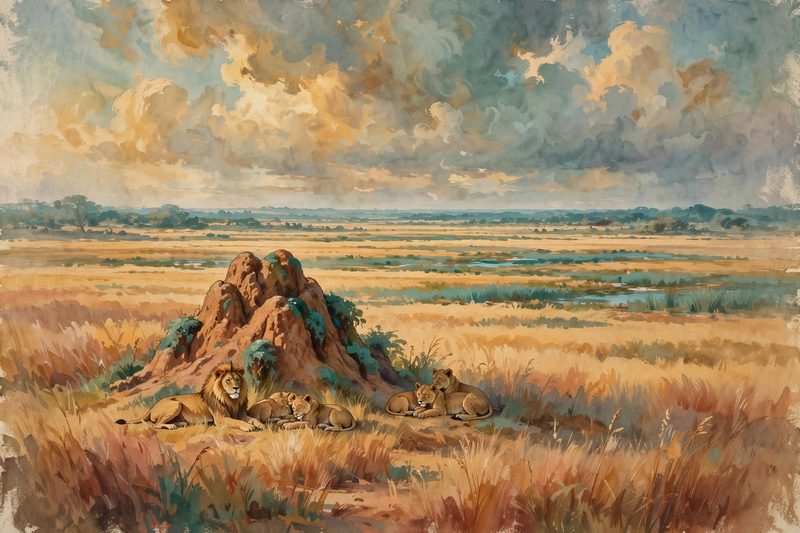
- The Busanga Plains: one of Africa's great seasonal wildlife spectacles, with huge lion prides, reported up to 20 strong, and thousands of red lechwe. The prides are famous for tree-climbing and aquatic hunting behaviour, which has been documented; sources do not show the climbing is seasonal.
- Genuine remoteness: you can stand on an open floodplain and see no other vehicle or person.
- Cheetah: Kafue is reported to support Zambia's largest cheetah population, though recent research indicates parts of the population may be declining; the open country makes them visible.
- Antelope diversity: often described as the most varied antelope viewing on the continent, from sable and roan to oribi and sitatunga.
- Hot-air ballooning: generally late August through October, drifting over floodplains at dawn, one of Africa's most exclusive balloon experiences.
- Wild dogs: one of Africa's important populations, ranging the woodlands.
Seasonality
The Busanga camps are seasonal, with dates varying by camp. Wilderness lists Busanga Bush Camp's 2026 season as 1 June to 31 October; the camp is seasonally closed from 1 November 2026. The plains flood November to May and are inaccessible by vehicle; by June the water is dropping and game is building. June and July are cooler with high water in the channels; August to October is peak, the plains at their driest and predators concentrated. Hot-air ballooning generally operates from late August through October. November brings the rains and seasonal camp closures.
The rest of Kafue follows the standard Zambian dry season, May to October, with the same green-season closures and trade-offs as other parks. If Busanga is your target, June to October is the only window.
Transport
Getting there: most visitors fly. Wilderness Air and other charters connect Lusaka (about 1.5 hours) and Livingstone (about 2 hours) directly to the Plains Airstrip on Busanga. Transfer arrangements from the airstrip vary by camp and conditions, so confirm them with your camp for your travel dates; from August to October the transfer is typically a straightforward 40-minute road journey.
By road, the Lusaka to Mongu highway crosses the park north of its centre, giving access to the central areas. Seasonal dirt roads link from Kalomo, Namwala and Kasempa. Self-driving Kafue demands a well-equipped 4x4, full self-sufficiency and tolerance for tsetse; most visitors fly to the Busanga camps.
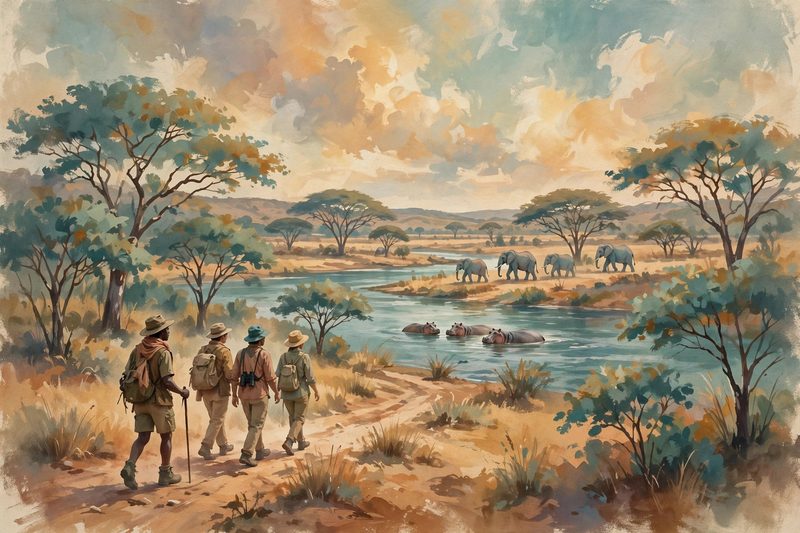
Getting around: game drives in open 4x4s are the core activity. Seasonal boating and mokoro trips run early in the season when water levels allow. Hot-air ballooning generally operates from late August through October, ending with a champagne breakfast on the plains; confirm exact dates and availability with your camp. Walking safaris are offered in some areas. Night drives are available at some camps.
Budgets and where to stay
Kafue is a fly-in luxury destination at the top end and self-drive camping at the bottom, with little in between. Rough bands per person per night; confirm all rates before you go.
| Band | Indicative rate | Notes |
|---|---|---|
| Busanga luxury camps | $900 to $1,500-plus | Wilderness lists Busanga Bush Camp at US$1,366 per person per night for stays 1 June to 31 October 2026. Verified Oct 2026. |
| Central and southern lodges | $400 to $800 | Verify 2026; treat older directory listings as unconfirmed until reconfirmed. |
| Park campsites | Far less | For self-drivers; verify the 2026 tariff before travel. |
Iconic camps (all named in published sources):
- Shumba Camp (Wilderness): six raised tents on a wooded island in the heart of the plains, the most luxurious address in Kafue, named for the lion prides around it.
- Busanga Bush Camp (Wilderness): Shumba's rustic sister camp, four tents, rebuilt each year after the floods recede, for purists.
Beyond Wilderness, current listings include Mukambi Safaris and Green Safaris in the central area, plus KaingU, Kasabushi and Mawimbi; in the south, Nanzhila's camps and Musungwa Safari Lodge. Treat older directory-only entries as unverified. Park fees: the 2026 tariff is unconfirmed; published sources conflict, so confirm current rates with DNPW and your camp before travel.
Risks and local rules
- Visa: Zambia single-entry visa is US$50 ($50.50 by card), with new fees in force from 1 January 2026. Verified Oct 2026. The KAZA Univisa is also US$50 for eligible nationalities, covering multiple visits between Zambia and Zimbabwe for 30 days plus day trips to Botswana via Kazungula, but it is not issued at Kafue National Park, so arrange it at an eligible arrival point.
- Health: malaria prophylaxis is essential. Tsetse flies are widespread in Kafue's woodlands; Busanga's open plains can have fewer, especially in the dry season, but are not guaranteed tsetse-free. Neutral clothing, repellent, and keeping vehicle windows up in woodland help. A yellow fever certificate is required if arriving from an endemic country.
- Safety: extreme remoteness is the main risk factor. Fly-in itineraries keep you with professionals throughout. Self-drivers must be fully equipped: recovery gear, satellite communication, fuel and water margins. Standard wildlife rules apply everywhere.
- US advisory: Zambia is currently listed as Level 1, exercise normal precautions; that listing is dated 31 July 2023, with no fresh 2026 assessment.
- Money: Zambian kwacha. Lodges may quote in US dollars and may take cards, but covered domestic payments to Zambia-resident businesses are required in kwacha under current rules; how consistently this is enforced is unclear. Carry kwacha for tips and extras. No ATMs anywhere near the park; draw cash in Lusaka or Livingstone.
- Connectivity: very limited. Expect no signal for most of a Kafue trip; lodges have satellite Wi-Fi of varying quality. Download offline maps.
Travel gently
Kafue's tourism footprint is deliberately light, and that lightness is protective: operator presence, notably Wilderness's year-round investment despite a five-month season, funds anti-poaching and community employment in one of Africa's great wildernesses. Since July 2022, African Parks has co-managed the park with Zambia's Department of National Parks and Wildlife under a 20-year agreement. Your visit directly subsidizes protection across 22,400 square kilometres.
Keep to the seasonal access windows; the closed months let the floodplains rest. Confirm your camp's transfer arrangements for your dates rather than assuming the water is low enough to drive.
Next in the Zambia guide
Questions, answered honestly
Is Kafue worth it over South Luangwa or Lower Zambezi?
For a first safari, no: South Luangwa is denser and easier. For a second or third trip, absolutely: the scale, solitude and Busanga predator spectacle are unmatched. It rewards experienced safari travellers.
Why are the Busanga camps only open five months?
The plains flood in the rains (November to May) and are unreachable by vehicle. Camps are rebuilt or reopened once waters drop, roughly June, and close with the returning rains around the end of October. Wilderness lists Busanga Bush Camp's 2026 season as 1 June to 31 October.
Will I see the tree-climbing lions?
They are famous for it and the behaviour has been documented, but the sources do not show it is seasonal. The prides, reported up to 20 strong, are reliably impressive regardless; treat the climbing as a bonus.
How bad are the tsetse flies?
Unpleasant in the miombo woodlands, especially for self-drivers with windows down. The open Busanga Plains can have fewer tsetse, especially in the dry season, but are not guaranteed tsetse-free. Repellent, neutral clothing and closed vehicles in woodland are the standard defences.
Can I self-drive Kafue?
Yes, in the central and southern park via the Lusaka-Mongu road and seasonal tracks, with a proper 4x4 and full self-sufficiency. Busanga itself is fly-in only for practical purposes.
How does the ballooning work?
Seasonal, generally late August through October, weather dependent. An hour aloft at dawn over the plains followed by a champagne breakfast. Book well ahead; seats are few. Confirm exact dates and availability with your camp.