Why visit
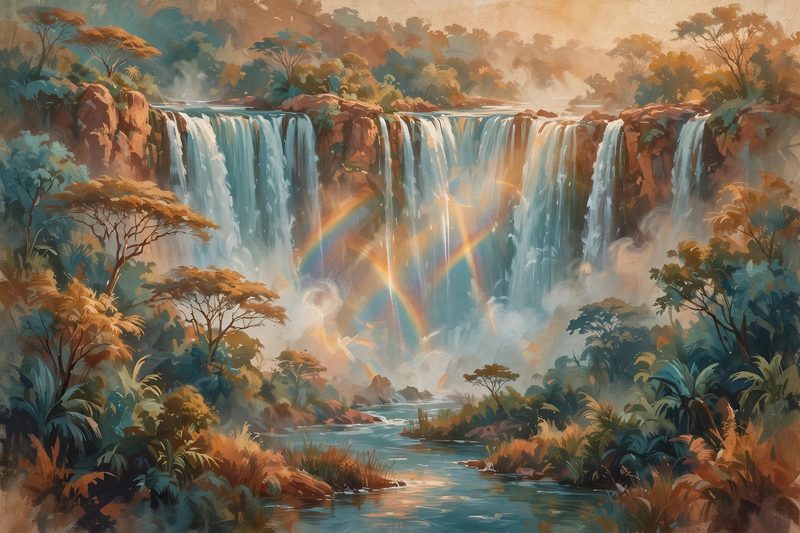
Livingstone is Zambia's tourism capital, a working town with 177,393 residents at the 2022 census and about 196,000 estimated in 2026. The falls lie roughly 10 to 12 kilometres by road from central Livingstone, close enough for a quick taxi ride, far enough that hotel prices stay noticeably lower than across the river in Zimbabwe. The town was founded in 1905 and named after David Livingstone, the Scottish explorer who in 1855 became the first European to see the falls, known locally as Mosi-oa-Tunya, the smoke that thunders.
The colonial-era centre still shows its Edwardian bones: low stone and brick buildings, wide streets, and the old railway sheds that now house the railway museum. This is not a polished resort town. It is a place where tourists mingle with traders at the town market, where white rhinos graze a few minutes from the main road, and where the Zambezi sets the daily rhythm, from the morning spray rising over the gorge to the sunset cruises drifting back at dusk.
What makes Livingstone worth staying in, rather than just passing through, is the density of experiences within a small radius. Grade 5 white water, a 111-metre bungy jump, white rhino walks, one of Africa's largest curio markets, and the country's oldest museum all sit within a town you can cross in twenty minutes.
Signature experiences
- The adventure base, not the falls side. White-water rafting in the Batoka Gorge, the bungy and bridge swing off Victoria Falls Bridge, microlight and helicopter flights over the gorge: all run from Livingstone, with lower prices than the Zimbabwe side.
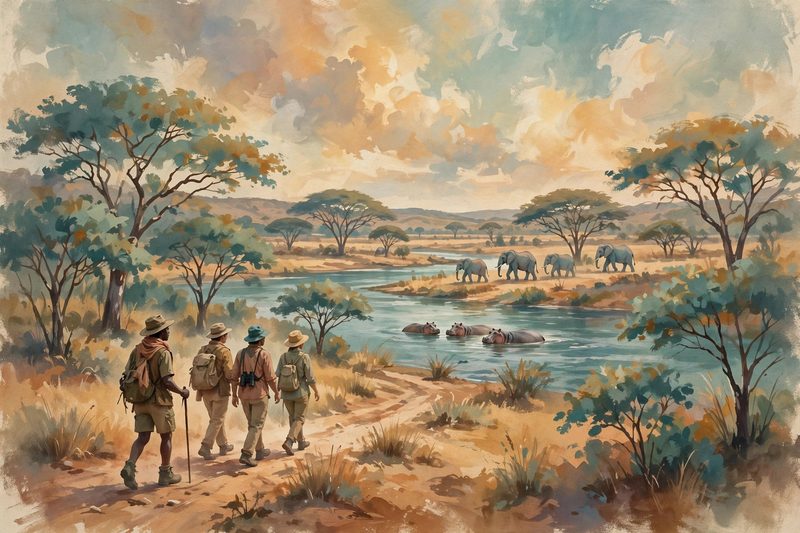
- White rhinos minutes from town. Mosi-oa-Tunya National Park is the only place in Zambia with white rhinos, closely guarded by park scouts, and it borders the town. Zambia's smallest national park stretches about 12 km along the Zambezi above the falls, with elephant, giraffe, buffalo, zebra, hippo, and crocodile as well. Walking safaris with armed rangers, self-drives, and river cruises are all possible.
- Markets and crafts with real makers. Mukuni Park Curio Market, on Mwela Street in the centre, is a covered maze of stalls selling hand-carved wooden sculptures, masks, baskets, chitenge fabrics, and beaded jewellery. Bargaining is expected and the vendors are the craftspeople themselves.
- A museum worth a morning. The Livingstone Museum, founded in 1934, is the oldest and largest museum in Zambia, with archaeology, ethnography, and history galleries plus David Livingstone's personal belongings. Allow 1 to 2 hours. The museum website lists non-resident admission at US$5 for adults and US$3 for children; confirm current rates before visiting.
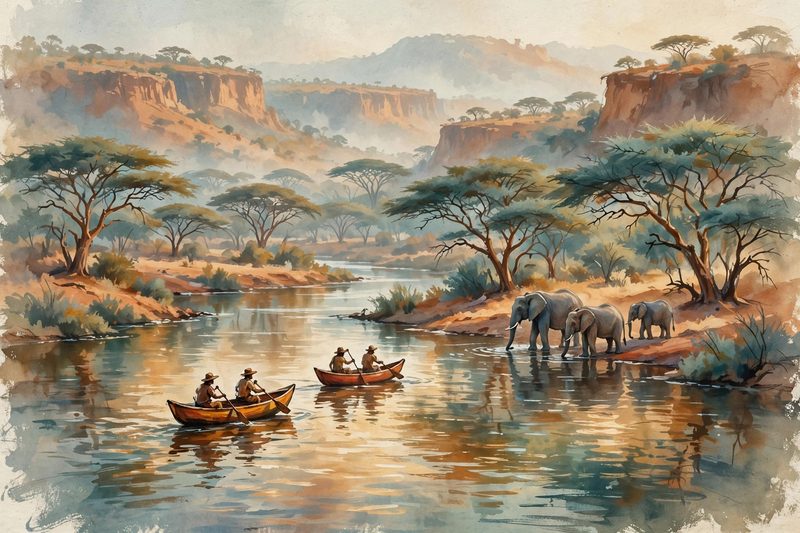
- The Zambezi at golden hour. Sunset cruises on the upper river are the town's signature wind-down, with elephants often visible along the banks.
- Livingstone Island and Devil's Pool. Boat departures to the island at the lip of the falls, with breakfast, lunch, or high-tea slots. Devil's Pool swimming is typically available from mid-August to late December, depending on river levels; confirm exact dates with the operator. Reported Livingstone Island tour prices range from US$149 to US$209 per person depending on sitting and season. Verified Oct 2026. Max 24 guests, minimum age 12 for the pools. Book ahead in peak season.
Seasonality
The falls follow the Zambezi's water cycle, and the cycle decides which activities are available.
- May to October (dry season): best overall window. Days are warm and sunny, the falls are clear of spray for photography, and all adventure activities run. September to October is hottest, often above 35C.
- March to May (high water): the falls are at their most powerful after the upstream rains, with spray visible kilometres away. The flip side is that the Zambian side can be walled off by spray, and white-water rafting may be suspended at peak flood, usually around April to May. High-water rafting, when it runs, starts at rapid 11 instead of the Boiling Pot.
- August to December (low water): the most technical rafting, starting at rapid 1 directly below the falls. Devil's Pool is typically open around mid-August to late December, depending on river levels; confirm availability with the operator. By October to December the Zambian side of the falls can be very low or nearly dry, so cross to the Zimbabwe side for the full panorama if that matters to you.
- December to March (wet season): rain, mostly in short afternoon bursts. Lush bush, fewer tourists, lower lodge rates, but some activities run on reduced schedules.
Transport
Getting there: Harry Mwanga Nkumbula International Airport (LVI) sits on the northern edge of town and is the closest airport to Victoria Falls. Allow roughly 15 to 30 minutes from the airport to town; confirm the estimate with your hotel or transfer provider. Most lodges arrange airport pickup if booked in advance; a pre-booked private shuttle runs about $20 per person (confirm current rates). Domestic flights from Lusaka on Proflight Zambia and Zambia Airways run multiple times daily, roughly 1 hour 10 minutes. International arrivals come via Johannesburg, about 1 hour 55 minutes, on Airlink, South African Airways, and several codeshare partners. Eco-fly's 2026 schedule also lists direct services from Nelspruit, Cape Town, and Nairobi, and Windhoek via Proflight.
From Zimbabwe: cross at the Victoria Falls Bridge. Border posts sit at each end of the bridge, and the KAZA Univisa (US$50, Verified Oct 2026) covers multiple entries between Zambia and Zimbabwe for up to 30 days, plus qualifying day trips to Botswana via Kazungula. It is available on arrival at Livingstone Airport and at the Victoria Falls and Kazungula border controls, subject to nationality eligibility, and also online. For the bridge bungy you only need a gate pass, not a full visa, but bring your passport.
Getting around: taxis are plentiful and cheap but unmetered. Agree the fare before you get in, and pay in kwacha, not dollars, or you will pay the tourist price. A roughly 5 km in-town ride is quoted around $2.70 equivalent (confirm current fares). Your hotel can call a known driver, which is the safest option at night. The town centre is compact and walkable by day; do not walk the road to the falls (about 8 to 10 km), especially at night, because of reported robberies and elephants along the road. Cheap shared kombi minibuses run set routes around town, crowded but fine by day. Bicycle hire is available, including guided cycle tours such as Local Cowboy Cycle Tours, which visit the local market and communities and support a community school. Car rental is available, but traffic can be hectic and road lighting is poor, so night driving is best avoided.
Budgets and where to stay
Three areas define your choice. Prices vary by dates; confirm rates for your trip before booking.
- Town centre: walkable, close to the museum, curio market, and local restaurants. Best value. A September 2026 aggregator snapshot listed some Livingstone guesthouses at US$34 to $63 nightly before taxes and fees. Jollyboys Backpackers is the long-standing budget institution.
- Mosi-oa-Tunya Road (the falls road): lodges strung along the road to the falls, including the Radisson Blu Mosi-oa-Tunya Resort (around $286 per night; confirm current rates) and mid-range options like Maramba River Lodge and the Victoria Falls Waterfront (around $54 to $200 per night; confirm current rates).
- Zambezi riverfront: upstream lodges along the river, quieter, with sunset views and frequent wildlife. Luxury prices vary by dates and property; a fixed current band is not established, so get quotes in writing.
Iconic properties: the Royal Livingstone Hotel by Anantara is the five-star grande dame, set on the river with zebras grazing its lawns, its own entrance to the falls, Victorian-style architecture, and repeated wins as Zambia's leading hotel at the World Travel Awards. Tongabezi Lodge has been a Zambia tourism icon for over 30 years, but its 2026 operating status and details are unconfirmed; verify against a current operator source before publication.
Indicative daily budgets per person, excluding international flights (Oct 2026, reference points, not verified market averages): about US$70 to $90 budget, US$120 to $220 mid-range, US$250 to $400-plus luxury. Sample 2026 figures put Victoria Falls park entry at about $20 and Livingstone Museum entry at $5 to $7; confirm the official tariff.
Risks and local rules
- Visa: US, UK, Canadian, Australian, and listed EU nationals are visa-exempt for Zambia, but stay terms vary (UK and Australian guidance allows up to 90 days in a 12-month period), so confirm your applicable allowance with Zambia Immigration before travel. Non-exempt nationalities can get a visa on arrival or eVisa; Zambia's single-entry visa is US$50 ($50.50 by card), with new fees from 1 January 2026. Verified Oct 2026. Passport must be valid at least six months beyond departure. The KAZA Univisa costs US$50 and allows multiple visits between Zambia and Zimbabwe for up to 30 days, plus qualifying day trips to Botswana via Kazungula; it is available online and on arrival at Livingstone Airport and the Victoria Falls and Kazungula border controls, subject to nationality eligibility.
- Health: malaria is a year-round risk across Zambia, including Livingstone, and travel-health authorities recommend antimalarial chemoprophylaxis plus bite precautions (repellent, covered clothing at dusk, nets where rooms are not sealed). Some lodges are open-sided river environments, so take the evening mosquito question seriously. Drink bottled or boiled water. Yellow fever vaccination is only required if arriving from an endemic country.
- Safety: Livingstone is generally a calm town that works hard to keep visitors safe, but petty crime targets tourists: bag snatching and muggings on dark streets, especially downtown at night, and around the long road to the falls. Take taxis after dark, keep valuables out of sight, and agree taxi fares upfront. Beware unlicensed guides selling fake rafting or cheap activity packages, a reported scam; book activities through your lodge or established operators. Wildlife is a real consideration: elephants cross roads at dusk and the falls road should not be walked at night. Driving at night is best avoided due to poor lighting and unmarked hazards.
- Money: the currency is the Zambian kwacha (ZMW). Zambia's rules require kwacha for covered domestic payments, including tourists' payments to resident businesses, subject to stated exemptions; available official material does not establish how consistently this is enforced. Some lodges and operators may accept US dollars, but you will get better prices in kwacha for markets, taxis, and local restaurants. Cards are accepted at most lodges and larger restaurants, often with a 3 to 5 percent surcharge. ATMs exist in town, but Visa cards work far more reliably than Mastercard, machines can be temperamental, and banks keep short hours (typically weekday mornings to early afternoon). Bring newer-series, clean US dollar bills in small denominations. Change kwacha back before leaving the country; it is not usable abroad.
- Language: English is the official language and works everywhere in the tourist trade. Locally, Tonga is widely spoken in the Livingstone area. Learning mwapoleni (a respectful hello) goes a long way.
- Connectivity: lodges generally have Wi-Fi, often slow but workable. Local SIM cards with data bundles are cheap and widely available at the airport and malls.
Travel gently
- Buy direct from makers. Mukuni Park Curio Market vendors are largely the carvers, weavers, and painters themselves. Buying from them, rather than from hotel gift shops with markups, puts money straight into the maker. Bargain, but fairly: the opening price is rarely insulting and a good-faith haggle usually lands somewhere both sides are happy with.
- Visit Mukuni Village thoughtfully. Guided tours of the Leya village outside town are advertised at roughly US$50 to $55 per person, but that is a tour price, not a confirmed village donation; check locally what any direct visit or contribution costs. It is a real, inhabited village, not a staged attraction, so go with a local guide, ask before photographing people, and buy crafts there.
- Choose rafting operators carefully. Book with established, certified operators only. The fake-guide scam is a real safety issue on this river, and reputable operators employ certified river guides, safety kayakers, and proper equipment. Your lodge's recommendations are the safest filter.
- Cycle with the community. Local Cowboy Cycle Tours directs part of its proceeds to a community school and ends tours there. It is a low-impact way to see Livingstone beyond the tourist corridor.
- Keep wildlife wild. Do not feed elephants or other wildlife along the riverfront and falls road, and keep a respectful distance. Mosi-oa-Tunya's rhinos survive because of intensive anti-poaching protection; walking safaris there are led by armed rangers, and you should follow their instructions exactly.
Next in the Zambia guide
Questions, answered honestly
How many days do I need in Livingstone?
Three full days covers the essentials: one day for the falls and the bungy, one for rafting or a rhino walk plus the curio market and museum, and one for Livingstone Island or a relaxed riverfront day. Four days lets you add the Zimbabwe side and a sunset cruise without rushing.
Should I stay in town or near the falls?
Town for value and local life: guesthouses are cheaper and the museum, markets, and local food are on your doorstep. Falls road or riverfront lodges for convenience and atmosphere: shorter transfers, wildlife on your doorstep, higher prices. There is no wrong answer, but if your budget is tight, town wins.
Is the bungy jump safe?
The operation is run by an experienced company with dual harness systems and decades of jumps behind it. That said, it is a 111-metre jump off a gorge bridge, and it carries the same medical exclusions as any extreme activity: no heart conditions, no pregnancy, no serious back problems, weight limits 40 to 140 kg, minimum age 14. Assess your own risk honestly.
When can I go white-water rafting?
Roughly year-round except at peak flood. The best technical rafting is the low-water season, about August to December, starting at rapid 1 below the falls. High-water rafting runs about January to July, starting at rapid 11, but the river may close for safety around April into May or early June, depending on water levels. The exact windows shift with each year's rains, so confirm with your operator before booking.
How do I bargain at the curio market?
Start at roughly half the asking price, stay friendly, and be prepared to walk slowly away; vendors often call you back with a better price. Buying several items from one stall usually unlocks a discount. Once you agree, the deal is the deal. Bring kwacha in small notes.
Can I visit Zimbabwe for the day?
Yes, easily. The KAZA Univisa (US$50, Verified Oct 2026) allows eligible visitors multiple crossings between Zambia and Zimbabwe for up to 30 days, plus qualifying day trips to Botswana via Kazungula. It is available online and on arrival at Livingstone Airport and the Victoria Falls and Kazungula border controls, subject to nationality eligibility. Many travellers do both sides of the falls in one trip: the Zambian side for Devil's Pool and rafting, the Zimbabwe side for the classic full-width views, especially in the low-water months when the Zambian side runs thin.