Why visit
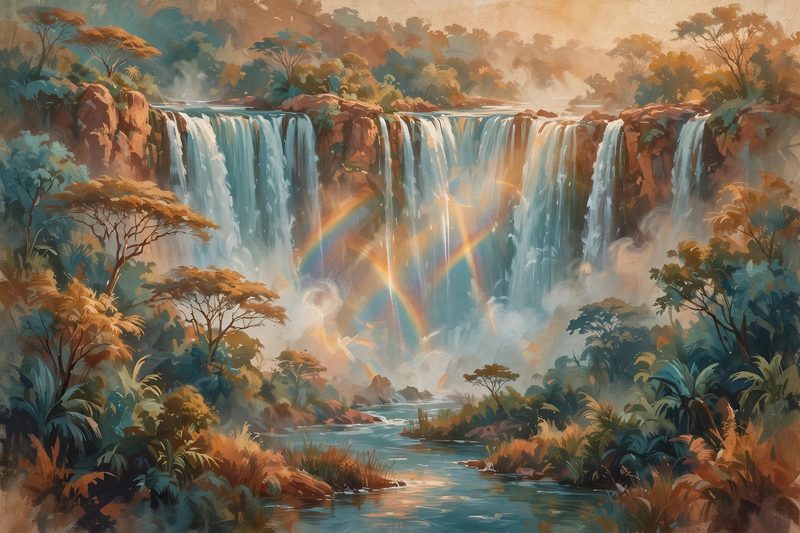
Victoria Falls sits on the border between Zambia and Zimbabwe, where the full width of the Zambezi River plunges over a basalt cliff into the First Gorge below. The indigenous Lozi name is Mosi-oa-Tunya, the smoke that thunders, and the Tonga name is Shungu Namutitima, boiling water. Both are officially recognised alongside the name Scottish explorer David Livingstone gave it in 1855, after he was led to the falls and viewed them from what is now called Livingstone Island.
With a combined width of 1,708 metres and a height of 108 metres, it is classified as the largest sheet of falling water in the world, roughly twice the height of Niagara Falls. The site has been a UNESCO World Heritage Site since 1989, listed jointly by both countries under Mosi-oa-Tunya National Park (Zambia) and Victoria Falls National Park (Zimbabwe). The Zambezi is a seasonal river, so the falls change character completely across the year: a thundering, spray-drenched wall of water from roughly February to May, and a clearer, more photogenic cascade with exposed rock face and accessible activities from roughly August to December.
Two sides, two experiences
Zimbabwe side: the classic panorama. A rainforest trail with roughly 15 viewpoints covers about 75% of the falls face-on, year-round. Victoria Falls town is small and walkable to the park entrance, and it is more tourist-oriented than Livingstone.
Zambia side: the close-up. The Knife-Edge Bridge footbridge puts you between the Main Falls and the Eastern Cataract, famous for drenching visitors in high-water months. Devil's Pool and Livingstone Island are Zambia-side, and microlight flights are Zambia-side only per some operators. The falls paths in Mosi-oa-Tunya National Park are walkable, roughly 2 km of trail, mostly flat but slippery near spray zones.
The bridge between them: the 1905 Victoria Falls Bridge is a road and rail bridge spanning the Batoka Gorge, with a 111-metre bungee jump off it. Crossing takes 20 to 45 minutes depending on queues, on foot or by transfer; bring your passport. A gate pass is issued at the bridge for the bungee area.
Signature experiences
- Devil's Pool: a natural rock pool at the very edge of the falls on Livingstone Island (Zambia), guided swim only in low-water months, typically mid-August to late December. Swimming is conditional on river levels and guide safety assessments, so confirm availability with Livingstone Island before booking. Reported Livingstone Island tour prices range from US$149 to US$209 per person depending on sitting and season. Verified Oct 2026. Max 24 guests, minimum age 12.
- Livingstone Island: the small island at the crest where David Livingstone first viewed the falls in 1855. Tours leave by boat from the Royal Livingstone jetty, with breakfast, lunch, or high-tea slots.
- White-water rafting: Grade 5 rapids in the Batoka Gorge, widely regarded as some of the best rafting in the world. In the low-water season (approximately August to December), the full-stretch run covers rapids 1 to 19 (23 km) from the Boiling Pot directly below the falls. High-water runs start at rapid 11. Rafting may close during high water, typically from around April into May or early June depending on river levels; confirm availability for your dates. The climb out of the gorge is genuinely strenuous, and minimum ages apply.
- Helicopter Flight of Angels and microlight flights: aerial views of the full curtain and the zigzag gorges downstream.
- Sunset cruises on the upper Zambezi: evening boat trips with drinks, watching hippos, crocodiles and elephants at golden hour.
- Bungee jump off Victoria Falls Bridge: 111 metres, confirmed by the operator and multiple booking platforms. A solo-jump price is not confirmed by current sources (booking platforms and operator sheets disagree), so confirm with the operator before booking. Weight limits and minimum age apply.
- Boma dinner and drum show: a Zimbabwe-side evening dinner with drumming and dancing.
Seasonality
Peak flow, February to May (roughly): the Zambezi is in full flood after the upstream rains in Angola and Zambia. The falls become one unbroken curtain, the spray can rise 400 m and be seen from miles away, and the roar is constant. Trade-off: spray can completely obscure viewpoints, especially February to April, and you will get soaked (raincoats are usually provided). April is commonly cited as the peak month; exact peak timing shifts with annual rainfall.
Balanced, June to August (roughly): water is still high but receding, spray begins to clear, and visibility improves. Many consider June to August the sweet spot for photography: strong flow, clear air, manageable mist. This is also prime safari season in the surrounding region.
Low water, September to November (roughly): lowest flow, especially October. By late October, low seasonal flows normally leave bare-rock sections visible on the Zambian side, especially at the Eastern Cataract; this is not the same as the whole falls drying up, though drought can intensify the low-water appearance. Trade-off: this is the season for Devil's Pool, rafting from the Boiling Pot (rapids 1 to 19), and the clearest photography. The Zimbabwe side still shows a full curtain year-round.
Early rains, December to January: the first rains arrive, the river starts rising again, and crowds are thinner. Heat builds, spray returns, and Devil's Pool closes as levels rise (timing varies).
Transport
Getting there: the two gateway airports are Harry Mwanga Nkumbula International Airport (LVI) in Livingstone, Zambia, and Victoria Falls International Airport (VFA) in Victoria Falls, Zimbabwe. Typical routings connect through Lusaka (Kenneth Kaunda International), Johannesburg (O.R. Tambo), Nairobi, or Addis Ababa. The two towns are about 11 km apart, separated by the Victoria Falls Bridge and the border crossing.
Getting around: taxis and hotel transfers cover most movement; lodges usually arrange transfers to the falls, the airport, and activity meeting points. Cross-border day trips are routine. Bring your passport for the bridge crossing.
Park entry: Zambia-side entry for international visitors is quoted at US$20 in 2026 sources. Verified Oct 2026. Zimbabwe-side sources conflict between US$50 and US$58: confirm both with the relevant park authorities before publication. Entry fees are separate from any visa.
Budgets and where to stay
Areas: Livingstone, Zambia (a real town with markets, restaurants, and a relaxed local feel, about 10 km from the falls); Victoria Falls town, Zimbabwe (a tourist-focused town within walking distance of the falls); and river lodges upstream on the Zambezi, which combine river views with wildlife sightings.
Rough price bands per room per night (indicative, varies by season and inclusions; lodge quotes may instead be per person sharing):
| Band | Indicative rate (Oct 2026) |
|---|---|
| Budget | About US$20 to $60 |
| Mid-range | About US$150 to $350 |
| Luxury | About US$600 to $1,000-plus in peak season |
Iconic properties: the Royal Livingstone Victoria Falls Zambia Hotel by Anantara, a five-star hotel beside the park entrance whose guests get direct access to the falls paths; Tongabezi Lodge, an upmarket all-inclusive lodge on the Zambezi upstream (its 2026 operating status is unconfirmed, so verify before booking); and the Victoria Falls Hotel, another landmark option on the Zimbabwe side.
Risks and local rules
- Visa: visa requirements and eligibility vary by nationality; check current official rules before travel. As of 2026 information, Zambia's Immigration Department lists the KAZA Univisa at US$50, valid for up to 30 days, with multiple visits between Zambia and Zimbabwe and qualifying same-day trips to Botswana via Kazungula. Verified Oct 2026. Zambia's single-entry visa is US$50 ($50.50 by card), with new fees from 1 January 2026. Check your passport's eligibility for the Univisa before travel.
- Health: Victoria Falls is in a malaria area. Prophylaxis is recommended; consult a doctor before travel and use repellent and nets in the evening. A yellow fever certificate is required only if arriving from an endemic country. Do not drink untreated tap water in Victoria Falls town; use bottled, properly filtered, or boiled water. Check with your accommodation for current local advice.
- Safety: petty theft and touts around the bridge and markets are the main nuisance; keep valuables secure and do not wander alone at night. Wildlife is real: elephants cross the Livingstone road at night, baboons near the bridge are aggressive if you hold food, and hippos and crocodiles inhabit the Zambezi. Do not swim in the river outside guided activities.
- Money: Zambia uses the Zambian kwacha; Zimbabwe is heavily dollarized and most tourism prices are quoted in US dollars. US dollars are useful, especially in Zimbabwe, but Zambia's rules require kwacha for covered domestic payments to resident businesses, including payments by tourists, subject to stated exemptions; available official material does not establish how consistently this is enforced. Cards are accepted at hotels and many lodges but ATMs are unreliable. Carry cash for park gates and activities.
- Language: English is the official language in both countries and is used throughout the tourism sector. Local languages include Tonga, Lozi and Shona.
- Connectivity: local SIM cards from Zambian and Zimbabwean carriers are sold at the airports and in town; lodges and hotels offer Wi-Fi, though speeds vary. eSIM options exist but check coverage before departure.
Travel gently
- Choose licensed operators for Devil's Pool, rafting, and flights; they employ local guides and follow safety and environmental standards.
- Do not feed baboons, warthogs, or any wildlife in the parks; it creates aggressive animals that are later put down.
- Buy crafts from local makers in Livingstone's markets and Mukuni Village rather than mass-imported souvenirs.
- The falls' spray sustains a unique rainforest; stay on marked paths to protect it.
- Water levels are sensitive to upstream catchment changes and climate variability, so low-water seasons can bring sections of the falls nearly dry: frame this honestly rather than as a disappointment.
Next in the Zambia guide
Questions, answered honestly
Should I base myself in Zambia or Zimbabwe?
For the classic view, Zimbabwe: its rainforest trail shows about 75% of the falls face-on, year-round. For adventure, Zambia: Devil's Pool, Livingstone Island, microlight flights, and the Zambia-side park experience are all Zambia-side. With three or more nights, base on one side and day-trip across with the KAZA Univisa, if eligible. With one night, sleep in Zimbabwe.
Is Devil's Pool safe, and when is it open?
It is a guided experience, and swimming is conditional on river levels and guide safety assessments. It usually operates from mid-August to late December, including October, but availability is not guaranteed for a particular date; confirm with the operator before booking. Under-12s are not permitted per local guidance. It books out, so reserve ahead.
How many days do I need?
Two full days covers both sides of the falls. Three days is the practical minimum to add one excursion such as a sunset cruise, helicopter flight, or rafting day. Five days allows a Chobe or Hwange safari day trip on top.
How does the border crossing work?
The Victoria Falls Bridge crossing between Livingstone (Zambia) and Victoria Falls town (Zimbabwe) takes 20 to 45 minutes, on foot or by transfer. Bring your passport. The KAZA Univisa (US$50, Verified Oct 2026) lets eligible visitors cross back and forth for up to 30 days and allows qualifying same-day trips to Botswana via Kazungula; check current rules and your passport's eligibility. Park entry fees are separate and paid at each gate.
Which are the best viewpoints?
On the Zimbabwe side, the Main Falls and Rainbow Falls viewpoints along the rainforest trail give the widest views; Danger Point looks down into the gorge. On the Zambia side, the Knife-Edge Bridge puts you in the spray at the falls' lip, and the Eastern Cataract viewpoints get you closest to the water.
Can I swim near the falls?
Devil's Pool (Zambia side, typically mid-August to late December, guided and subject to river levels and safety assessments) is the sanctioned swim at the falls' edge. Angel's Armchair, a nearby pool, is sometimes offered when Devil's Pool is closed. Do not swim anywhere else in the Zambezi: hippos, crocodiles and currents make it genuinely dangerous.