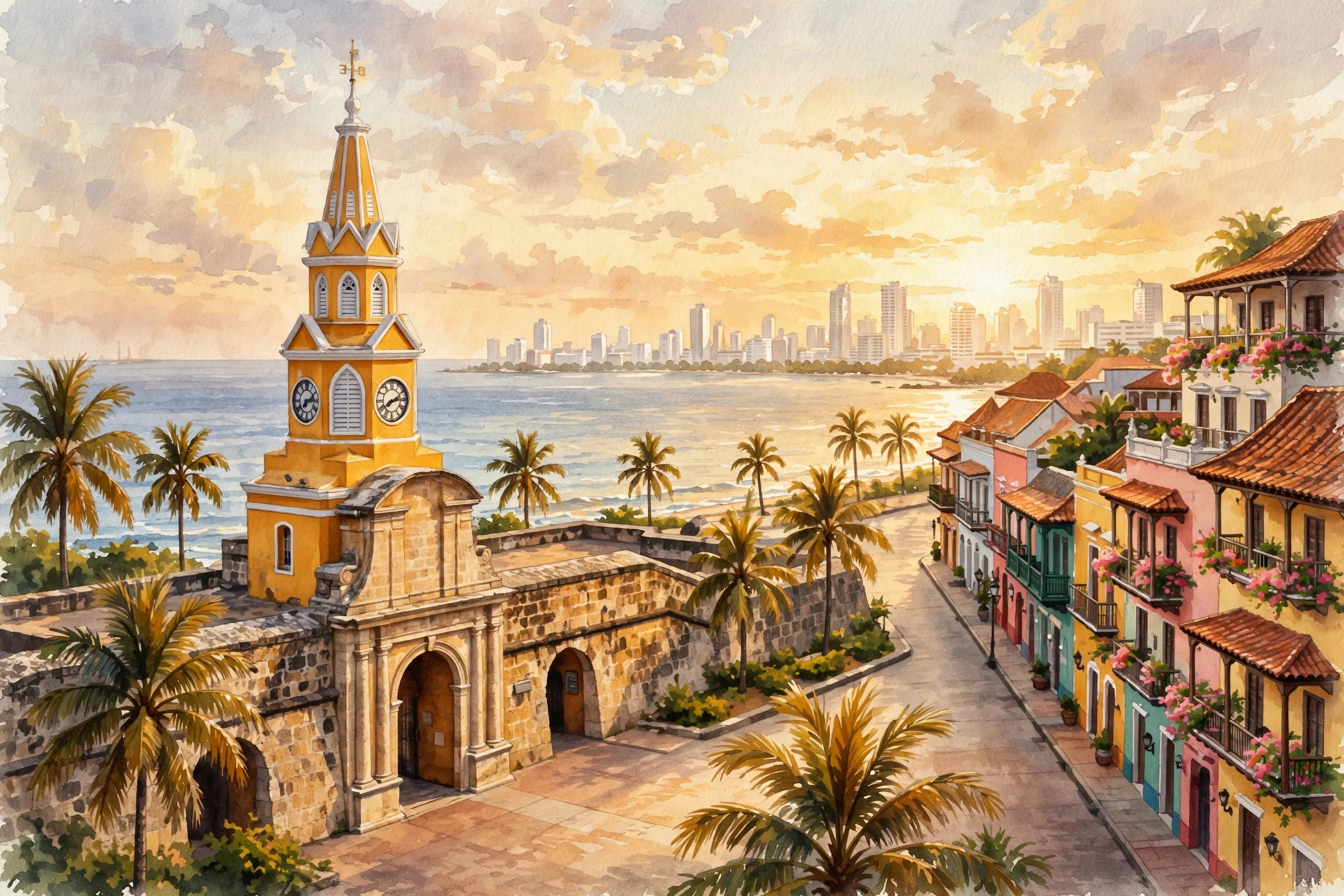
One country, set by altitude
Colombia does not have seasons the way temperate countries do. Temperature here is set by altitude, and the country stacks its worlds vertically: a cool Andean capital at 2,640 meters, a spring-like valley city that rarely leaves the low twenties, coffee hillsides in between, and a Caribbean coast that stays hot all year. Travel well here and you are really choosing altitudes, in the right order.
The standard circuit — the route this guide is built on — runs Bogotá for museums and the historic centre, Medellín for the Metrocable and Comuna 13, the Coffee Region for fincas and the Cocora Valley, Cartagena for the walled city, and Santa Marta and Tayrona where the Sierra Nevada foothills meet the Caribbean. It is the circuit Colombia's own promoters lead with, under the national brand Colombia, the Country of Beauty, and it is the part of the country that receives visitors steadily and well.
Honesty first, because this guide does it everywhere: Colombia's headline US advisory is Level 3, and parts of the country are Level 4 and off this guide's map entirely. The Essentials page names them. The circuit above is a different story — visited with city precautions, by large numbers of people, every week of the year.
Where in Colombia
The standard circuit, north to south- Bogotá — Andean capital, 2,640 m
- Medellín — Aburrá Valley, City of Eternal Spring
- Cartagena — Walled city on the Caribbean
- Coffee Region — Salento, Cocora Valley and the fincas
- Santa Marta & Tayrona — Sierra Nevada meets the sea
Colombia runs on altitude, not distance: Bogotá in the Andes, Medellín in its green valley, coffee country on the western slopes, and Cartagena and Tayrona on the Caribbean. This guide covers that circuit — and says plainly where it does not go. Open Colombia in Google Maps ↗
The places
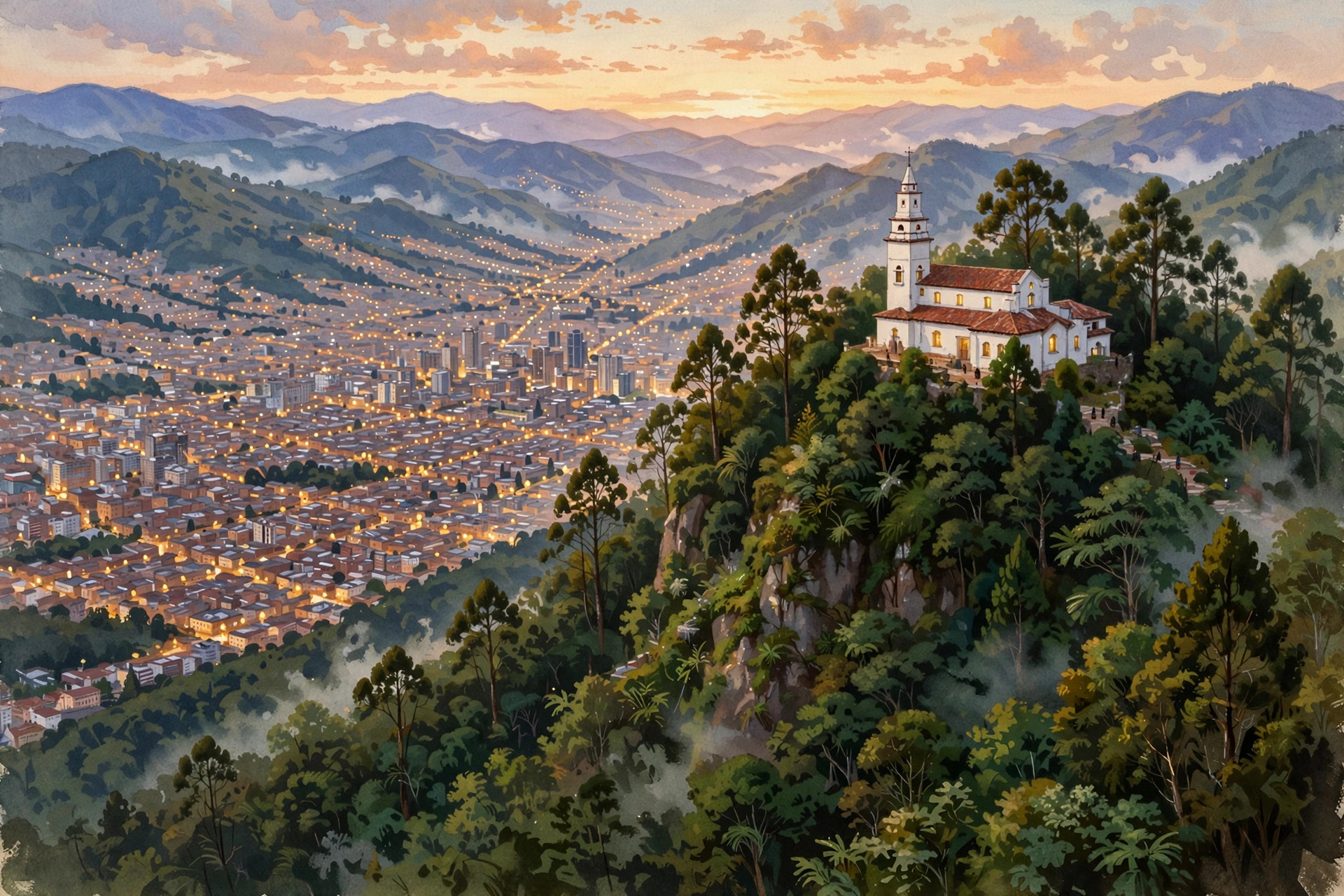
The high-altitude capital: the Gold Museum, La Candelaria, Monserrate above the eastern hills, and a serious food scene in the north.
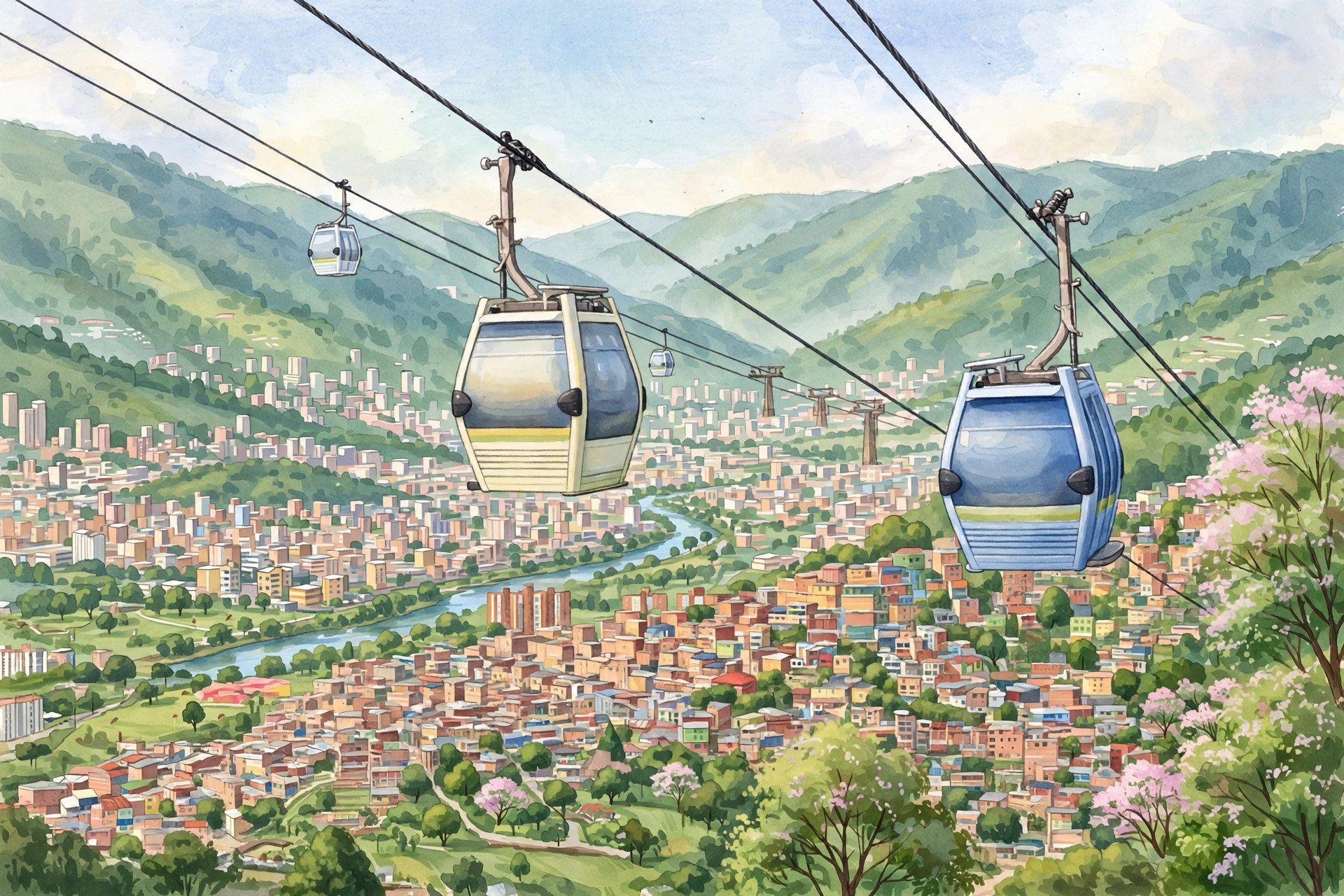
The City of Eternal Spring: ride the Metrocable over the comunas, walk Comuna 13, and time it for the Flower Festival if you can.
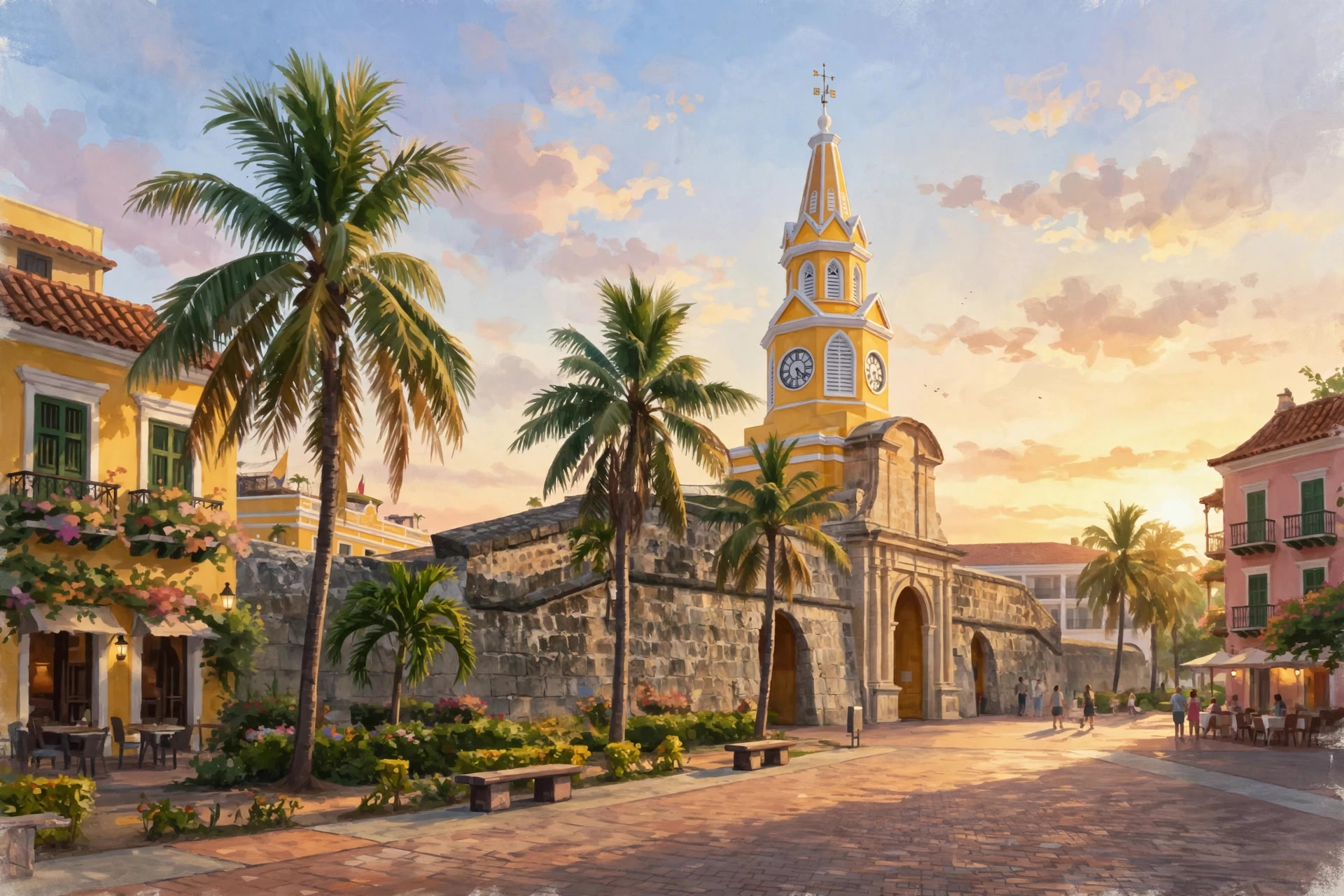
A UNESCO-listed walled city on the Caribbean: the Clock Tower gate, Getsemaní's street art, and boat days to the Rosario Islands.
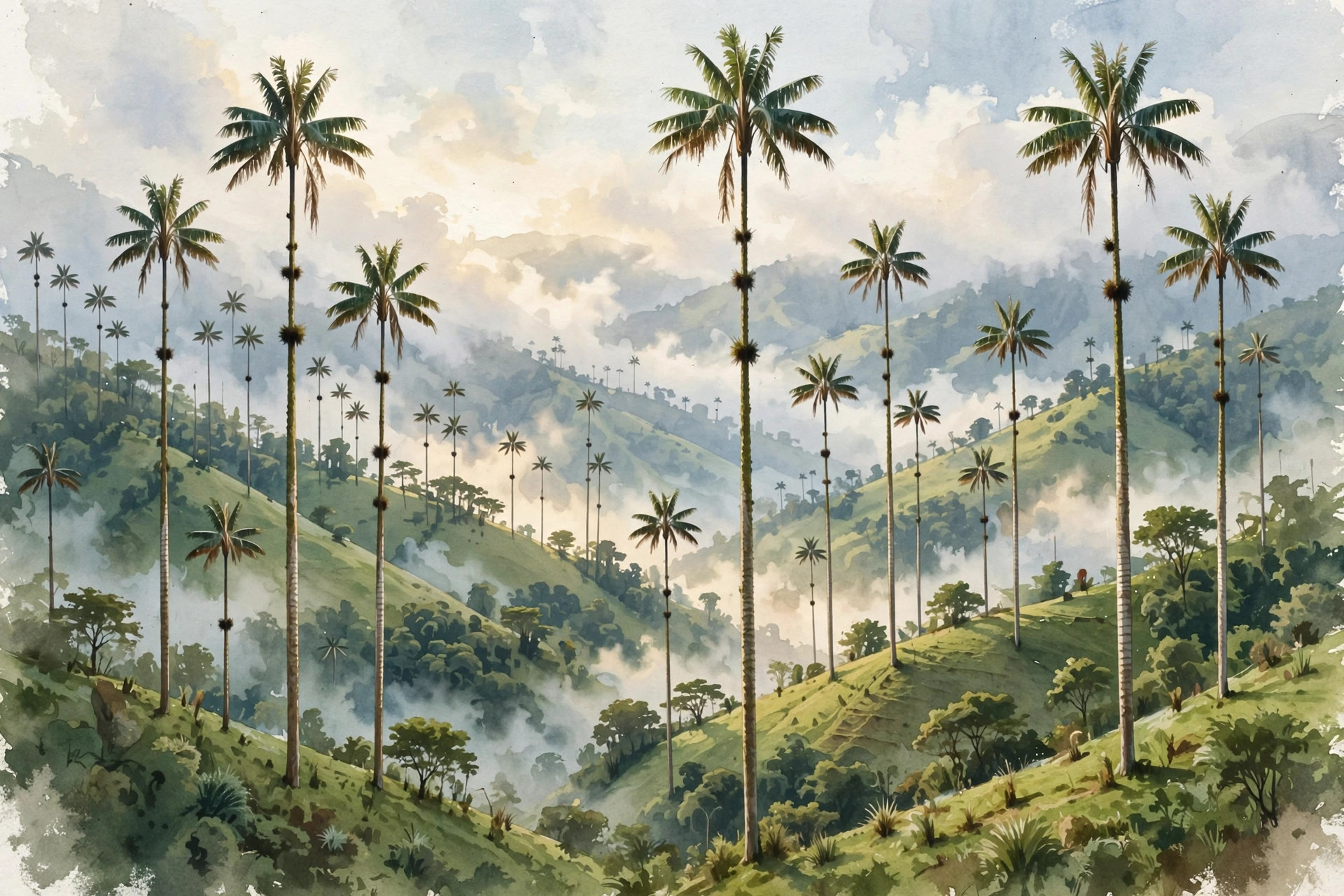
The Eje Cafetero: Salento's painted streets, wax palms in the Cocora Valley, and fincas where you pick, wash, roast and taste.
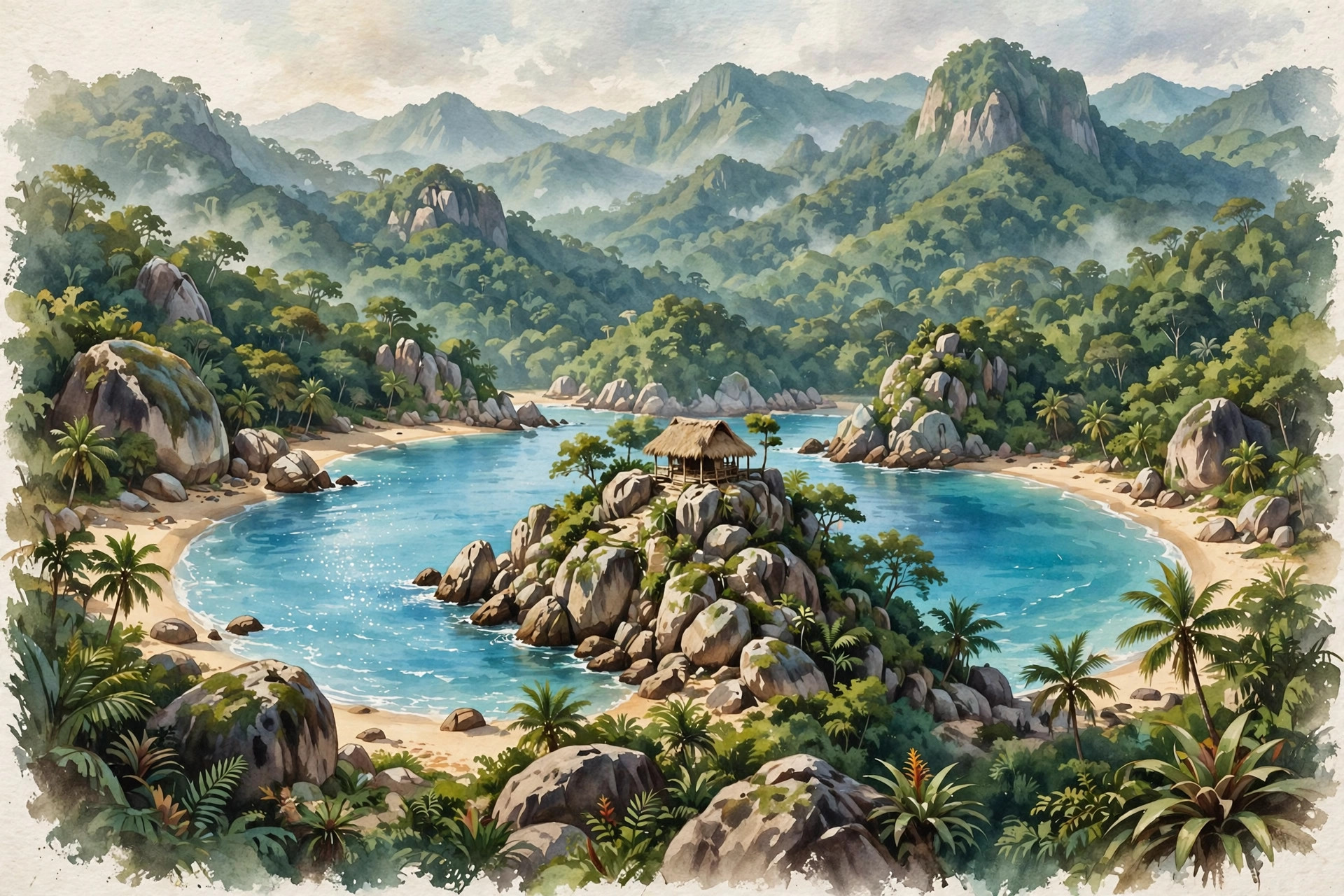
Jungle-backed Caribbean beaches under the Sierra Nevada — with three closure windows a year you must plan around.
Worth knowing beyond the circuit
- Guatapé and El Peñol — the classic Medellín day trip: climb the great rock (roughly 700 steps) for the reservoir panorama, then wander Guatapé's painted zócalo houses. Go early, and on a weekday if you can.
- Cali — the self-styled salsa capital, with schools and clubs year-round and the Feria de Cali in late December. Stay on the city circuit; the surrounding department carries a higher advisory.
- Villa de Leyva — a whitewashed colonial town a few hours from Bogotá, built around one of Colombia's largest cobbled plazas. Bogotá's favourite weekend escape; book holidays far ahead.
- San Andrés and Providencia — Colombia's Caribbean archipelago, with Raizal culture and a sea of seven colours. Every visitor must buy the separate departmental Tourist Card before boarding the flight — it is not waived by visa-free entry.
- Leticia and the Amazon — fly-in only, on the triple frontier with Brazil and Peru: jungle lodges, river excursions, pink dolphins. Yellow fever vaccination is essential.
- La Guajira — desert, Wayúu territory, and the northernmost point of South America. Only with a reputable 4x4 tour, cash and water carried in — never a self-drive add-on.
Why Colombia, why now
The growth is real. Colombia welcomed a record number of visitors in 2024, and the United States is its largest source market by a wide margin. The government is actively promoting dispersal beyond Cartagena and Bogotá — to the Pacific, La Guajira, the Amazon and the coffee country — which means the beyond-the-icons Colombia is getting easier to do well, not harder.
The variety is the point. No other South American trip pairs a Caribbean walled city with working coffee fincas and two great Andean cities this compactly. And Colombia is the natural northern bookend of an Andean arc: Bogotá to Quito is a short non-stop flight, and Bogotá to Lima only a little longer, so a Colombia trip extends south into Ecuador and Peru without backtracking.
The welcome is the surprise. Travelers consistently report that Colombians themselves are the highlight — in the fincas, on the Metrocable, in the markets. Learn a little Spanish, use it badly and cheerfully, and the country opens up.
Plan your trip
Two dry windows in the Andes, one long dry season on the Caribbean — and the Tayrona closures.
Fly the long legs, bus the short ones, and build in buffer days for mountain roads.
Check-Mig, money, the honest safety picture, yellow fever — the practical layer, dated.
Tours we're vetting for Colombia
We're lining up launch partners for guided tours in this region — operators we'd book ourselves. When we recommend one, we'll tell you exactly why, and any commission will be disclosed here.
No paid placements yet — when affiliate links go live here, they will be disclosed.
A note on how this guide works
Every XSCOPE country guide follows the same rules. Stable facts — geography, history, park names — are stated plainly. Anything that changes — fees, closures, advisories — carries a verified-as-of date or tells you to check before you go. Maps on this site are illustrative, not navigation maps. When we recommend booking something, we say so, and any paid relationship is disclosed.
Make This Trip Real: Colombia
Our paid trip guides pair the reel with the reality — dated itineraries, real costs, booking links. The Colombia editions are in production now.
No paid placements yet — when affiliate links go live here, they will be disclosed.