The practical layer
Money, documents, safety and health for Colombia — dated where it matters, honest where it counts. Colombia rewards the prepared: none of this is complicated, but two items (Check-Mig and the yellow fever rule) have hard deadlines, and the safety picture needs reading properly rather than skimming.
Where in Colombia
The standard circuit, north to south- Bogotá — Andean capital, 2,640 m
- Medellín — Aburrá Valley, City of Eternal Spring
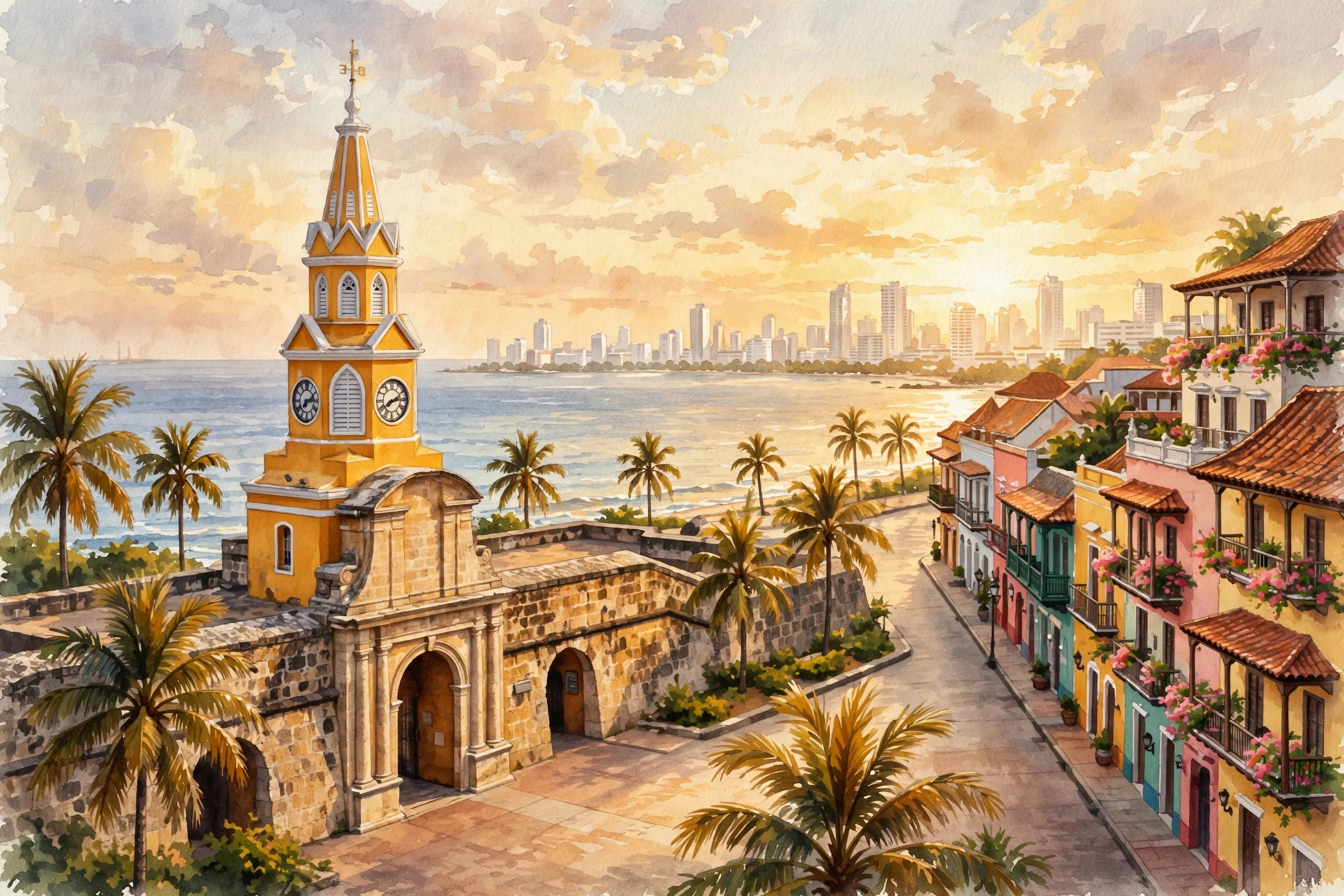
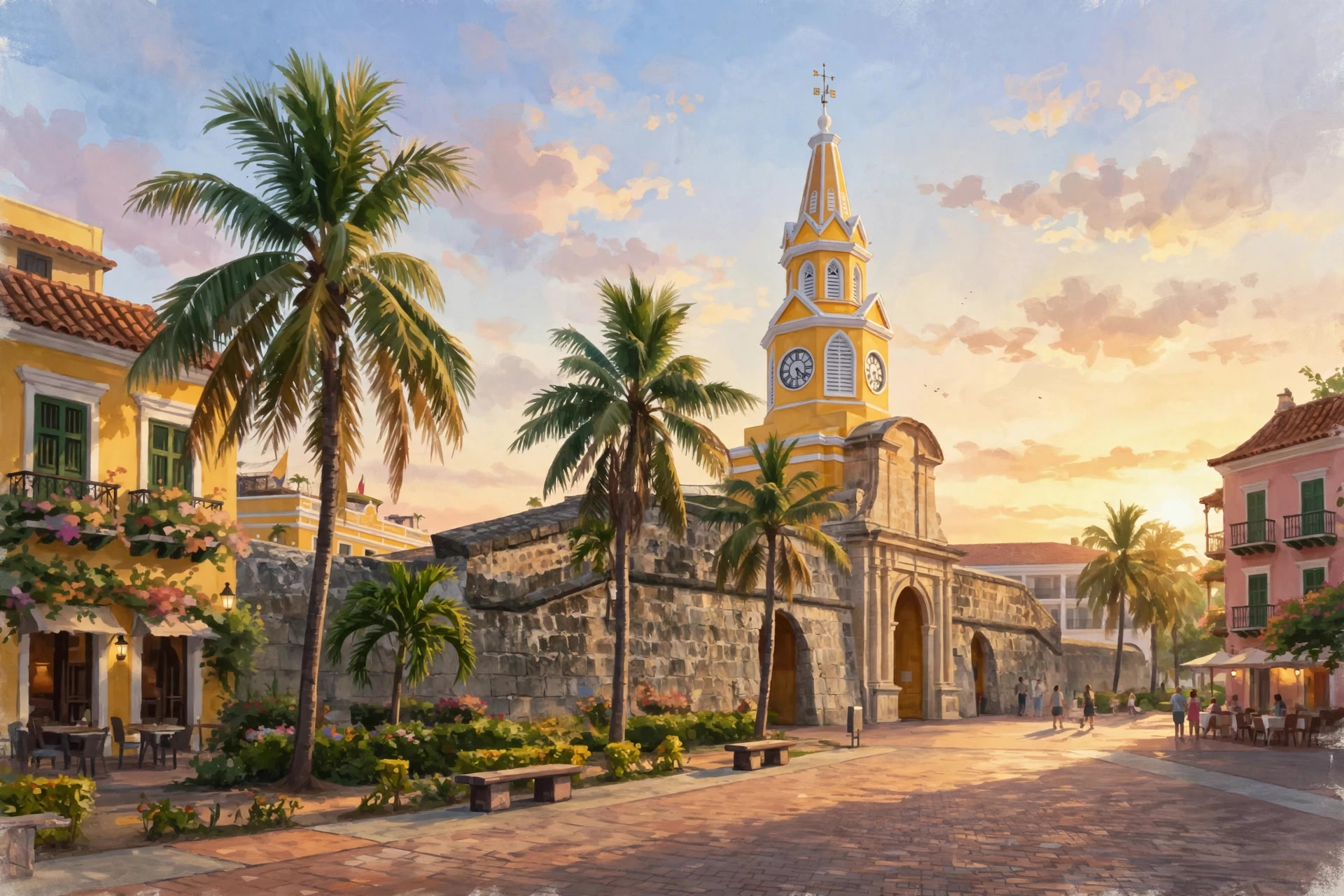
- Cartagena — Walled city on the Caribbean
- Coffee Region — Salento, Cocora Valley and the fincas
- Santa Marta & Tayrona — Sierra Nevada meets the sea
Colombia runs on altitude, not distance: Bogotá in the Andes, Medellín in its green valley, coffee country on the western slopes, and Cartagena and Tayrona on the Caribbean. This guide covers that circuit — and says plainly where it does not go. Open Colombia in Google Maps ↗
Money
Colombia uses the Colombian peso. Cards are widely accepted in the cities and on the standard circuit; cash is what small towns, markets, jeeps, park entrances and beach vendors run on. Carry a mix, keep small notes handy, and use ATMs inside banks or malls in daylight. Tell your bank you are travelling, and keep a second card separate from the first.
Documents
- Visa-free entry — US, UK, EU and 100+ other nationalities enter without a visa for tourism for up to 90 days, stamped on arrival at the officer's discretion.
- Check-Mig (mandatory) — complete Migración Colombia's free Check-Mig form online 72 hours to 1 hour before each international flight, inbound and outbound separately. Airlines check it at check-in. Use only the official Migración Colombia portal — third-party sites charge for a form that is free. Verified Oct 2026
- Passport — carry validity for your stay; carriers and authorities commonly expect six months and blank pages. Be ready to show onward or return travel and your accommodation details.
- Extending — a further 90 days can be requested at a Migración Colombia office or online before the first 90 expire, to a maximum of 180 days in a calendar year. Overstaying brings fines and future-entry problems.
- San Andrés — every visitor must buy the separate departmental Tourist Card before boarding a flight to the archipelago; visa-free entry does not waive it.
Safety
The honest picture, as of the US State Department advisory reissued in April 2025: Colombia overall is Level 3 — Reconsider Travel, for crime, terrorism, civil unrest and kidnapping. Older "Level 2" references still circulating online are out of date. Within that headline, specific areas are Level 4 — Do Not Travel: Arauca, Cauca (excluding Popayán) and Norte de Santander, the area within 10 km of the Venezuela border, and — in later 2026 reporting — Valle del Cauca outside Cali. The UK advises against all but essential travel to a similarly detailed list of border and Pacific sub-regions. Verified Oct 2026
What this means in practice: the risk is geographic, not uniform. The standard circuit in this guide — Bogotá's central and northern districts, Medellín's El Poblado, Laureles and Envigado, Cartagena's walled city, Getsemaní and Bocagrande, the Coffee Region towns, Santa Marta and Tayrona with licensed operators, Villa de Leyva, Cali city, San Andrés — is visited with city precautions. This guide builds nothing in the Level 4 zones, and neither should you. Check travel.state.gov and the UK FCDO Colombia advice before you book and again before you fly.
Everyday discipline, in local shorthand: no dar papaya — don't make yourself an easy target. Don't display phones or jewellery, don't use a phone at the kerbside, use app-based rides at night rather than hailing street taxis, and keep to lit, populated routes after dark. Demonstrations can close roads, especially in Bogotá, and landslides close Andean roads in the rainy seasons — build buffer days into any itinerary that ends in a flight home.
Health
- Yellow fever — changed in 2025. Colombia declared a yellow fever emergency in April 2025; Resolution 691 of 2025 requires a vaccination certificate (dose at least 10 days before travel) for entering natural parks in high and very-high-risk zones, including the Tayrona / Sierra Nevada area and Amazon reserves. Vaccinate and carry the yellow card for Tayrona, Amazon, La Guajira and rural itineraries. No certificate is routinely required simply to enter Colombia from the US, UK or EU unless arriving from a risk country — check the live Ministry of Health guidance before departure. Verified Oct 2026
- Altitude — Bogotá at 2,640 m is the circuit's ceiling: take the first 24 hours easy, hydrate, and go gently on alcohol. Medellín and the Coffee Region sit lower and feel it less.
- Sun and water — the Caribbean coast runs 28–32°C year-round; sun protection and water discipline are health measures there, not comfort tips.
- Insurance — travel insurance with medical cover is strongly recommended; confirm it covers every region on your itinerary, particularly if you are travelling against any FCDO sub-regional advice.
Packing
Pack for altitudes, not for a country: a warm layer and rain jacket for Bogotá's cool, rainy days at any time of year; light layers for Medellín's spring; the lightest clothing you own, plus serious sun protection, for Cartagena and Tayrona; boots that handle mud for Cocora and the Tayrona trails; and copies of your passport and yellow fever card kept separate from the originals.
Connectivity
Cities and the standard circuit are well covered; Tayrona, the Sierra and rural coffee country are patchier — download maps, bookings and the Check-Mig confirmation before you leave town. Keep the phone-in-hand rule from the safety section: connectivity is best enjoyed from inside a café, not at a kerb.
Tours we're vetting for Colombia
We're lining up launch partners for guided tours in this region — operators we'd book ourselves. When we recommend one, we'll tell you exactly why, and any commission will be disclosed here.
No paid placements yet — when affiliate links go live here, they will be disclosed.