A lake at the top of the itinerary — in every sense
Lake Titicaca is where the southern circuit reaches its ceiling. Puno, the city on its shore at 3,827 meters, is Peru's folkloric capital and the crossing point into Bolivia at Desaguadero and Kasani. The lake itself, at about 3,810 meters, holds a set of island cultures found nowhere else: islands built from reeds, islands famous for textiles, and islands where the visit is sleeping in a family home. It is one of the most distinctive stops in Peru. It is also the easiest to ruin by scheduling, which is why this page leads with order rather than sights.
Never come here first. Puno is higher than Cusco — higher than anywhere else a standard itinerary sleeps. Flying in from sea level and starting at the lake is the single most reliable way to spend a Peru trip feeling ill. Titicaca belongs at the end of the southern sequence, after the Sacred Valley, Cusco, and ideally Arequipa have done their acclimatising work.
Where in Peru
Schematic list — not for navigationPeru runs in three bands: the Pacific coast in the west, the Andes down the middle, and the Amazon across the east. Almost every first trip moves Lima → Sacred Valley → Cusco, then south to Arequipa and Titicaca, or east to the Amazon. Art for this panel is in production; the places below are placed by region, north to south.
- Lima — Pacific coast · gateway
- Cusco — Andes · 3,400 m
- Sacred Valley (Ollantaytambo) — Andes · 2,792 m
- Machu Picchu — Citadel · 2,430 m
- Arequipa — White City · 2,335 m
- Puno / Lake Titicaca — Altiplano · 3,827 m
- Puerto Maldonado — Amazon gateway
- Iquitos — Amazon River · fly-in
Illustrative schematic. Not for navigation. Open in Google Maps ↗
The islands, honestly ranked by depth
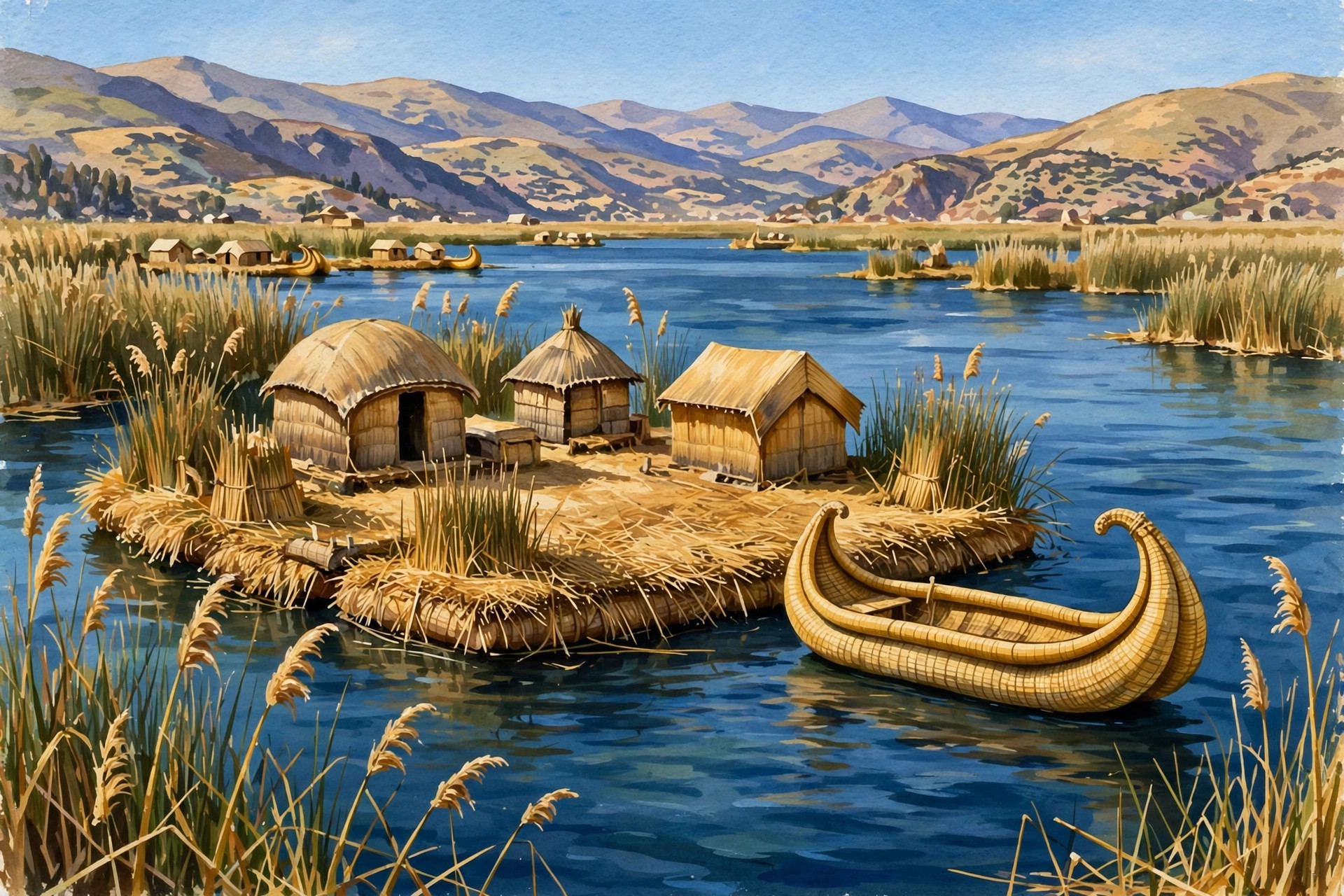
- Uros floating islands — the famous first stop: islands, houses, and boats all built from golden totora reeds that grow in the shallows. Fascinating, close to Puno, and quick — which is also the caveat. A half-day Uros-only tour is the thin version of Titicaca.
- Taquile — the full-day upgrade: an island whose textile tradition is the headline, with the walking, views, and village structure to fill a day properly. If you have one full day on the lake, this is the shape it should take, usually combined with Uros on the way out.
- Amantaní — the deepest version: an overnight homestay with a local family. Slower, simpler, and for many travellers the most memorable night of the southern circuit.
Puno itself
Puno is a working altiplano city rather than a beauty spot, and it wears its folklore proudly — it is known as Peru's folkloric capital, and its festival calendar is the city's real claim on your time if dates align. Treat it as the lake's practical base: boats in the morning, early nights, and respect for the altitude in everything from walking pace to the dinner menu. Nights are cold here in every month of the year; May to September brings the clearest skies and the sharpest light on the water.
Tours we're vetting for Lake Titicaca
We're lining up launch partners for guided tours in this region — operators we'd book ourselves. When we recommend one, we'll tell you exactly why, and any commission will be disclosed here.
No paid placements yet — when affiliate links go live here, they will be disclosed.
Onward and onward-planning
Titicaca is a natural hinge. Travellers continuing to Bolivia cross at Desaguadero or Kasani; travellers closing the Peru loop return via Arequipa or fly back toward Lima. Either way, build the same protection used everywhere in this guide: a buffer before any international departure, because demonstrations in Peru can close roads and rail lines without warning, and the altiplano legs are long ones to improvise. Sequenced last and given a full day or an overnight, the lake is not an add-on. It is the high, quiet ending the whole southern circuit has been climbing toward.
Where to stay in Puno & Lake Titicaca
Our vetted stay partners for this region are coming with the launch. Until then, every hotel and lodge mention in this guide is editorial — nobody paid to be here.
No paid placements yet — when affiliate links go live here, they will be disclosed.