The capital, at altitude
Bogotá sits at about 2,640 meters on a high Andean plateau, backed by the green eastern hills — the Cerros Orientales — that run the length of the city. It is Colombia's main international gateway, its business and government centre, and, for most visitors, the front door. Give that door more than a transit night: the museums alone justify two full days, and your body will thank you for taking the altitude slowly at the start of a trip rather than the end.
The weather sets the rhythm. Days are cool, typically in the teens, and rain can arrive in any month — the driest windows are December to March and July to August. Pack layers and a rain jacket whatever the calendar says, and plan indoor anchors (museums, markets, long lunches) for wet afternoons.
Where in Colombia
The standard circuit, north to south- Bogotá — Andean capital, 2,640 m
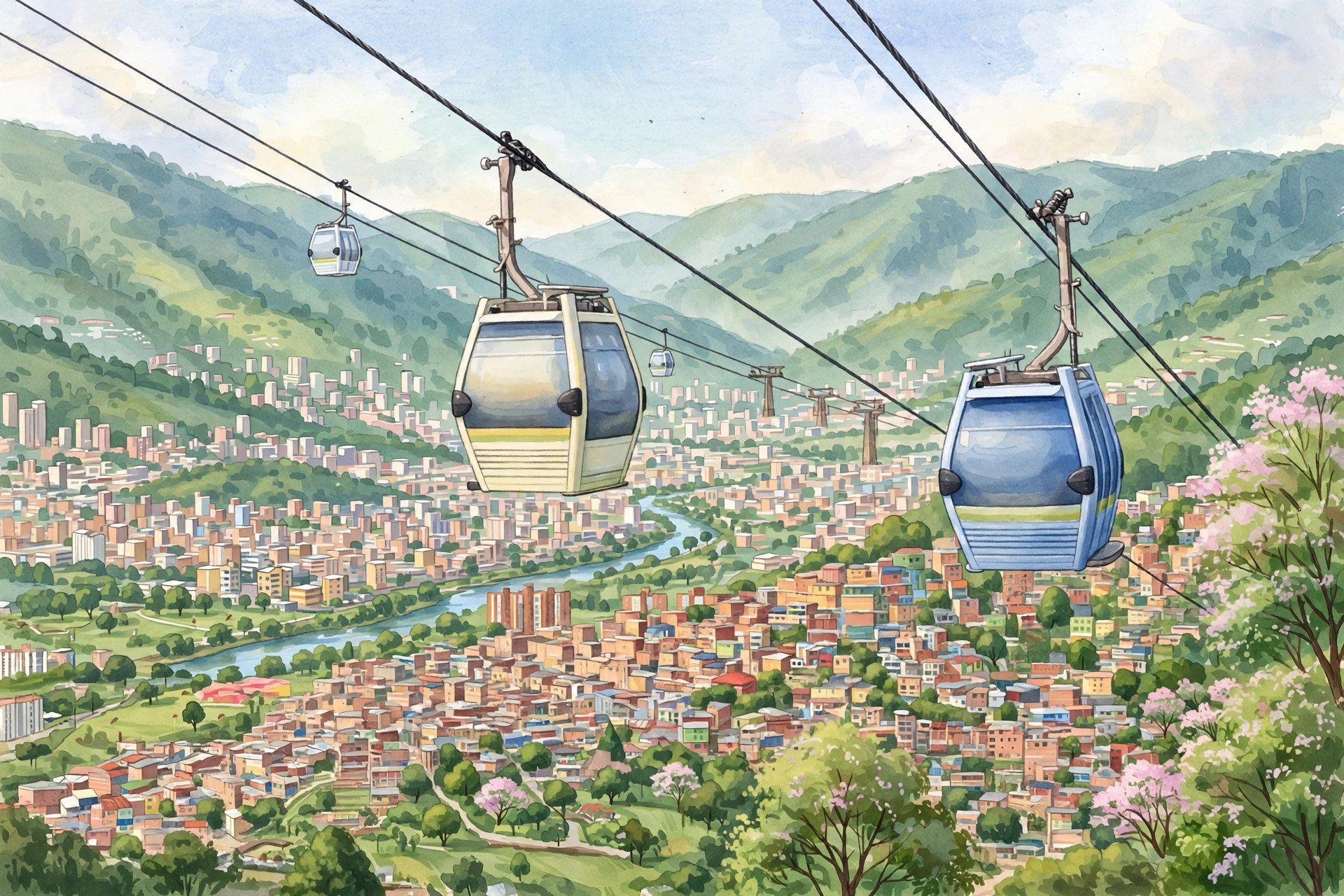
- Medellín — Aburrá Valley, City of Eternal Spring
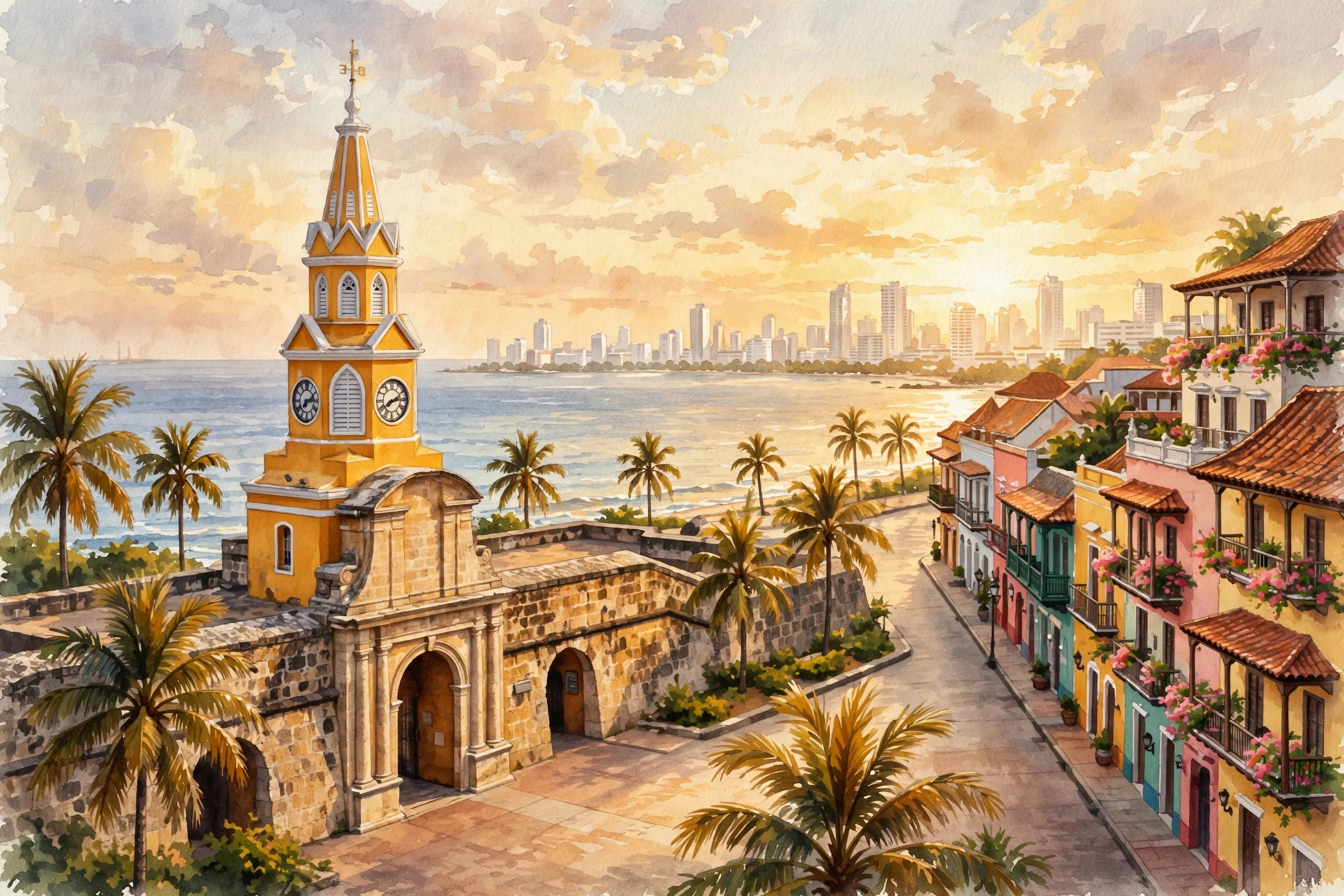
- Cartagena — Walled city on the Caribbean
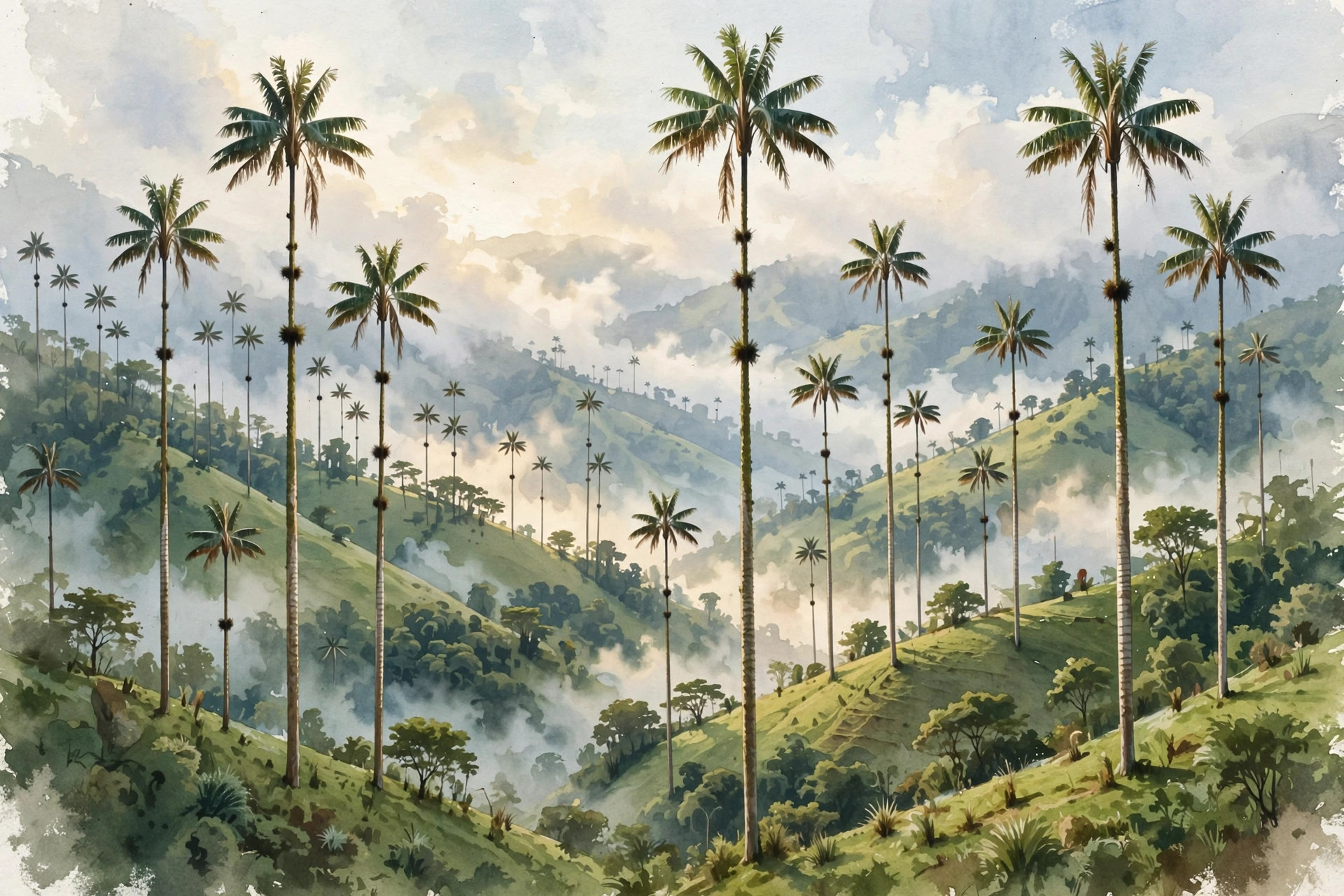
- Coffee Region — Salento, Cocora Valley and the fincas
- Santa Marta & Tayrona — Sierra Nevada meets the sea
Colombia runs on altitude, not distance: Bogotá in the Andes, Medellín in its green valley, coffee country on the western slopes, and Cartagena and Tayrona on the Caribbean. This guide covers that circuit — and says plainly where it does not go. Open Colombia in Google Maps ↗
La Candelaria and the historic centre
La Candelaria is the colonial heart: steep cobbled streets, painted houses, small museums and the city's founding square, Plaza de Bolívar, faced by the cathedral and the Capitol. Walk it by day, in a loop, and let the side streets set the pace.
- Museo del Oro (Gold Museum) — the world's largest collection of gold artefacts, including the Muisca raft tied to the El Dorado legend. This is Bogotá's single essential museum; go early, and note it is free on Sundays and very crowded then.
- Botero Museum — Fernando Botero's own collection, donated and free, in a beautiful colonial house a short walk from the Gold Museum.
- Plaza de Bolívar and the cathedral — the civic centre of the country, and the natural start or end point of a Candelaria walk.
Practical note, stated the way locals state it: enjoy La Candelaria in daylight, and base yourself further north at night. The dining and hotel districts of Chapinero, Zona G and Zona T are livelier after dark and are where most visitors sleep.
Monserrate
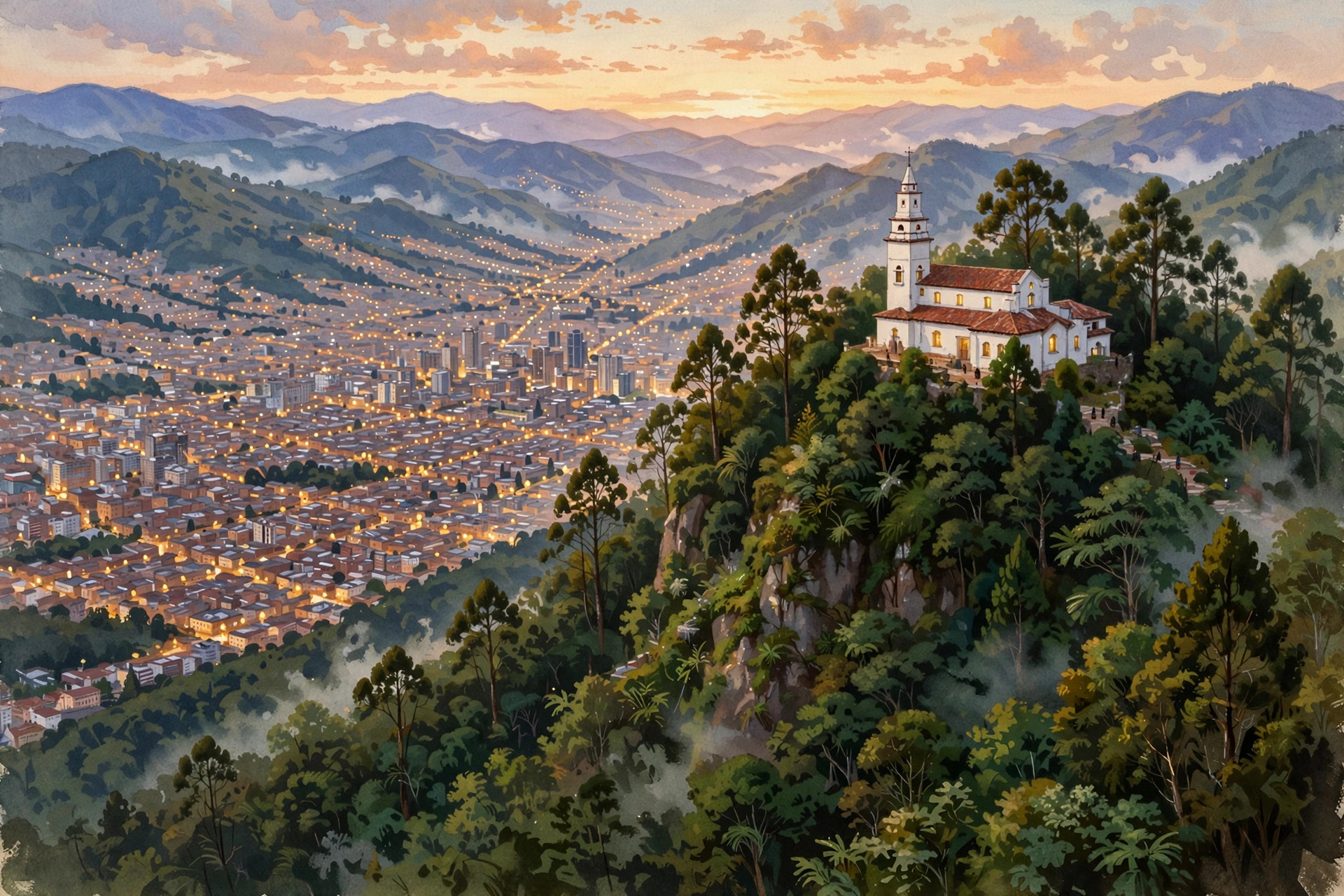
Above the eastern hills stands Monserrate: a white sanctuary church on the summit, reached by cable car or funicular, with the whole plateau city spread out below. On a clear morning it is the best orientation device in Bogotá — you can read the city's north-south sprawl in one view. Go early for the clearest air, and treat the climb (or even the ride) gently if you have just landed: the summit is well above the city, and the city is already high.
Tours we're vetting for Bogotá
We're lining up launch partners for guided tours in this region — operators we'd book ourselves. When we recommend one, we'll tell you exactly why, and any commission will be disclosed here.
No paid placements yet — when affiliate links go live here, they will be disclosed.
The north: eating and evenings
Bogotá's food scene is a destination in itself. Zona G (the G is for gourmet) and Zona T concentrate the restaurants visitors talk about on the flight home, and Chapinero mixes neighbourhood cafés with a younger, creative energy. Try ajiaco, the city's signature chicken, potato and corn soup, served with capers, cream and avocado — preferably on a cold, rainy afternoon, which Bogotá reliably provides.
Day trips
| Trip | Why go | Note |
|---|---|---|
| Zipaquirá Salt Cathedral | An underground cathedral carved inside a working salt mine | The classic half-to-full day out of the city |
| Villa de Leyva | Whitewashed colonial town, one of Colombia's largest cobbled plazas | A long day trip; better as an overnight |
| Guatavita | The lake country behind the El Dorado legend | Pairs naturally with the Gold Museum's Muisca raft |
Where to stay
- Chapinero / Zona G / Zona T — the default recommendation: dining, safety and an easy evening, with the historic centre a ride away by day.
- La Candelaria — for atmosphere and walking to the museums; quieter at night, so plan evenings accordingly.
Altitude and safety, briefly
Take the first 24 hours easy: hydrate, eat lightly, skip the celebratory bottle of wine. Demonstrations can close roads in the capital — build buffer into airport days. Use app-based rides rather than hailing street taxis, keep phones out of sight at the kerb, and read the full briefing on the Essentials page, including the nightlife warning that applies in Bogotá as much as in Medellín.
Markets and mornings
Start one morning at a market. Bogotá's plazas de mercado are where the city eats first: fruit you have never seen, cut and handed to you to taste; flower stalls; and food counters serving the day's soup to everyone from judges to builders. It is the fastest Spanish lesson and the best breakfast in the city, in the same room. Afterwards, the city's museums and the Candelaria are at their best before the afternoon rain — Bogotá rewards early risers and punishes optimistic scheduling, so front-load the days.
Where to stay in Bogotá
Our vetted stay partners for this region are coming with the launch. Until then, every hotel and lodge mention in this guide is editorial — nobody paid to be here.
No paid placements yet — when affiliate links go live here, they will be disclosed.